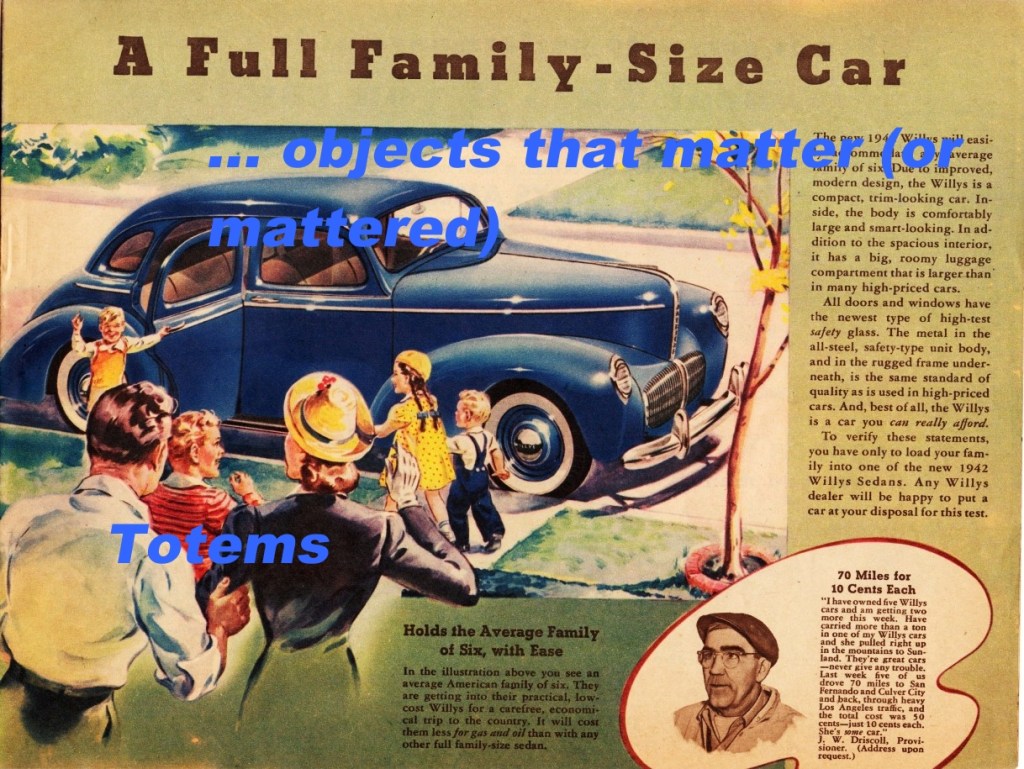
In my life, cars have been both totems and historical markers. But for most Americans (and, increasingly, the world’s population) cars are necessities, spiritual totems no longer. That does not mean the global auto industry doesn’t still try to sell us on those mysterious libidinal factors, the ego gratification, that characterized the boom period of the U.S. industry in the mid-20th century.
Some of us are still alive who are so entrenched in that period of history that we must accept it into our persona. I am a child of General Motors and Flint, Michigan. My father was an engineer and (I thought) a reasonably important cog in the plant-level management of one of many GM plants in that former mid-Michigan city. I remember every car we owned from 1950 through the time I separated myself from the auto-centric world, moving far away from that dreary midwestern landscape as an adult. Yet my separation, in mind and imagination, has never been complete — even in the third decade of the 21st century, the eighth decade of my life.
I do concede that my peculiar reference point, to cars as spiritual totems, is probably not shared by many these days. If some small subculture still exists, our better angels consistently tell us it is BAD! Was it always so bad? Cars did expand the world in the 20th century – enabling growth, bringing people together, bestowing us all with a sense of freedom unrivaled by any previous transportation technologies. But “car culture” also isolated people inside their personal conveyances – no longer dependent on public transportation, even for long journeys. Especially in the United States, the availability of land – given accessible highways – encouraged suburban sprawl, single family houses with driveways and garages, spreading out beyond cities to exurbia. This was not good, to say nothing of the quantity of fossil fuels burned to maintain such a civilization!
So, the consensus now is that we all need to distance ourselves from that car culture. Our society needs to re-urbanize. Well, that may be – but nostalgia still nags me. I can easily detail all cars my family and I acquired over a span of 75 years. My own automotive purchasing decisions, as a responsible adult, always placed great emphasis on research and data. I’ve suppressed those psychological “vibes” and social pressures that motivate industry marketing. But the following summary is also an autobiographical story of our family’s successive car owning epochs:
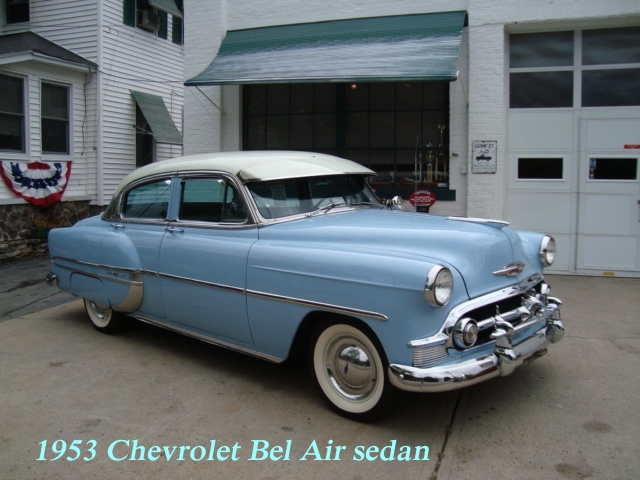
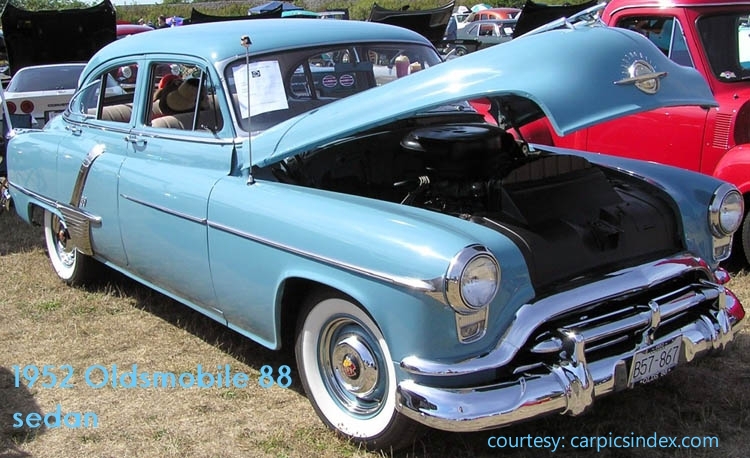
- 1950-53: A new car each year – but only one for the family – somehow, we made it work. They were all Chevrolets except for a 1952 Oldsmobile 88 2-door sedan, which my dad (he told me later) felt was needed for its powerful Rocket V8 engine since we were planning a summer road trip to the Rockies (it was fun, we stayed at a “dude ranch” in Wyoming!). A new stage of life began in 1953 when we moved from Dearborn to Flint. Our prosaic brown Chevy “210” 2-door became a second car for Mom. Ultimately, it was retained for eight long years. Flint life demanded my mom have her own car – leaving the prime annually updated model for Dad.
- 1954-58: These were the “Cadillac years” in our family – a new Caddy each year (Dad humbly claimed that resale was good enough to justify much higher purchase prices – especially given his hefty GM salaried employee discount). My mom loved those Cadillacs, even though she was relegated to that plain brown Chevy for her daily living, while Dad’s Cadillac spent most of its time in his parking space at the plant. I caught Mom’s pride when the Caddy sat in the driveway for all the neighbors to see – mostly on weekends – as well as our annual summer road trip vacations (New England, Chicago, even California via the famous “Route 66”).
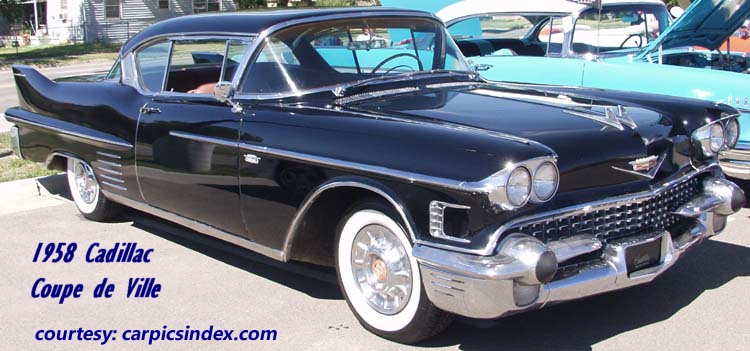
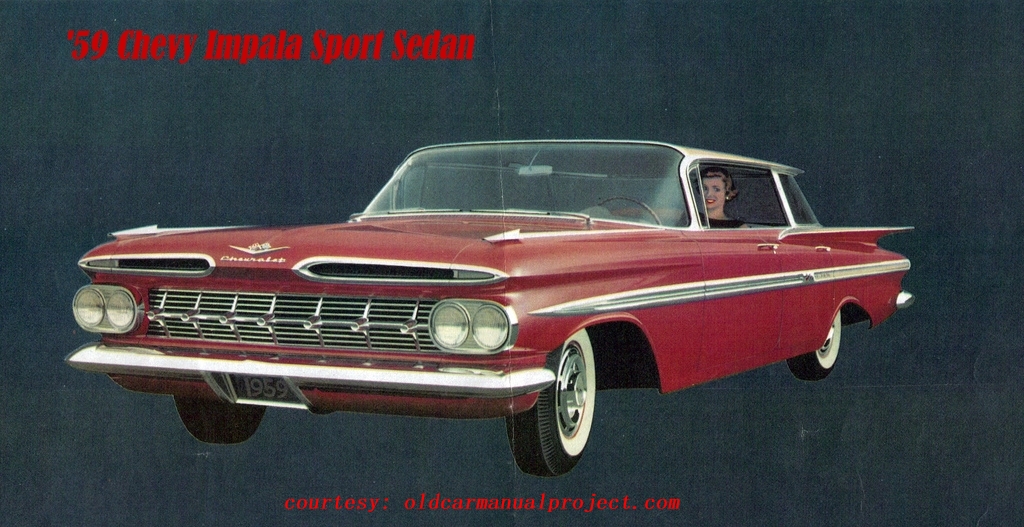
3. 1959: This was the year when I reached the age and maturity required to have some input in my parents’ regular car selection process. Ultimately, we decided on a coral-colored Chevrolet Impala 4-door hardtop (“Sport Sedan”) with its radical batwing rear end and wrap-around front and back “greenhouses.” After 1958, Dad resolved to dispense with the Cadillac nonsense – he was not happy with that last series 62 coupe, the entry level Cadillac. Apparently, there were quality control problems, and frustration with local Pontiac-Cadillac dealer service. He over-reacted by selling it early, right after we returned from our California vacation, and replacing it with a spartan 1958 Chevy Del Ray 2-door (“stripped down” trim level even for Chevrolet!). Now, for the 1959 model year, we were poised to push Dad up at least to the spiffier Chevrolets just introduced (new GM unitized body that year – common to all from Chevrolet through Cadillac). Allying with my mother, we made Dad spend more than he wanted on a car – a compromise, for sure, but the negotiations were a major development. That Impala was nice – great for our coming summer road trip to Washington, D.C.
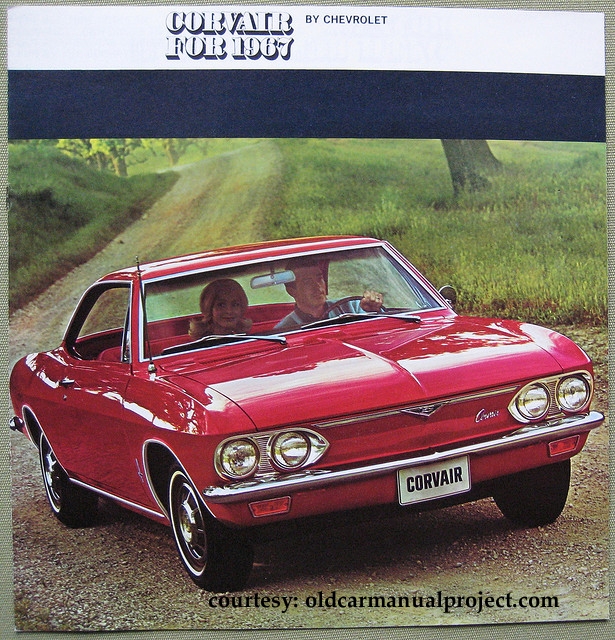
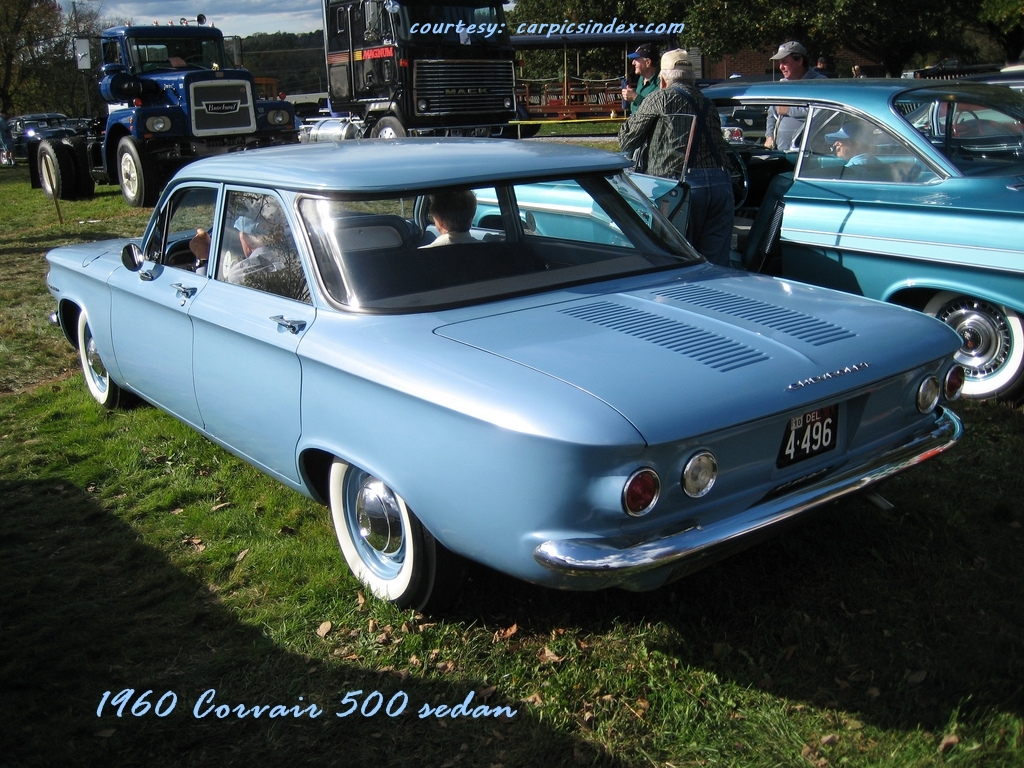
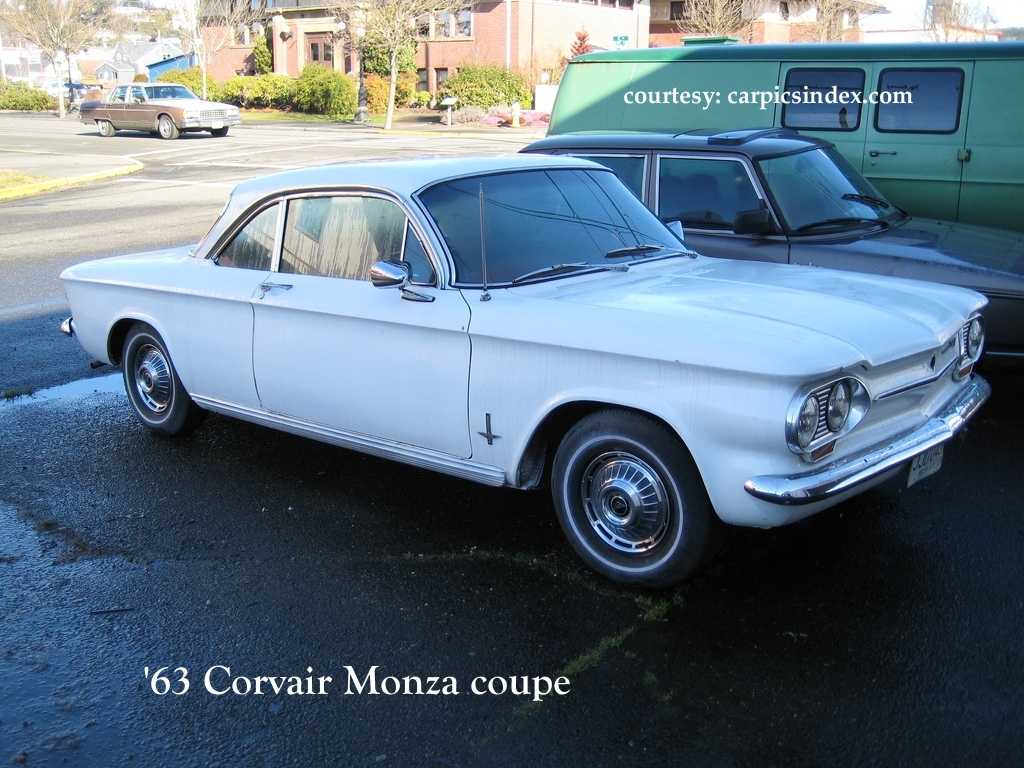
4. 1960-65: If those conspicuous “Cadillac years” of the ‘50s were now history, something new arrived in 1960 – the Corvair! It was a radically different small car from Chevrolet, clearly inspired by the popularity of the VW beetle, with similar rear-engine technology, but in a 4-door car more like competitor Ford’s new Falcon, or the Plymouth Valiant, or Rambler, in size and comfort. These were the “compacts.” We bought a striking black Corvair 700 sedan that first year (with white sidewall tires, it really did look sharp!). It was Dad’s car, occupying that same parking space that Cadillacs graced only two years earlier. Mom still drove her old ’53 Chevy for another year. But Corvairs became our family’s brand when we bought a 1963 Monza coupe, then a 1965 bright red Monza coupe with white vinyl interior – both of which openly carried my youthful imprint (acquiring my driver’s license in 1963), but still with Mom’s cheering support. For the 1965 model year we were a two-Corvair family – Dad drove the new red one to work, but occasionally let me drive it in the evening (yes, on dates in high school!). Mom and I usually drove the more sedate beige ’63.
5. 1961-66: These were the years of waning corporate influence over Dad – as he passed his peak career performance, and ultimately retired (though not losing that corporate discount). For 1961, my mom and I exercised dominion over car selection. It wound up being a yellow and white Impala CONVERTIBLE! Talk about spiffy! Dad refused to drive it to work; it was strictly my mom’s car (I was a passenger most of the time, but got my learners permit behind its wheel). Dad stuck with that black Corvair sedan, until he decided to upgrade for ’62 to an Olds Dynamic 88 Holiday Sedan (Olds name for 4-dr. hardtop) – shades of 1952, this time our planned summer road trip would be to Seattle for the World’s Fair, and Western Canada. 1963 and 1964 saw staid medium-priced GM cars (Buick, then Pontiac) for Dad, while Mom and I got to drive those zippy little Corvairs. After a break in ’65, when he drove that red Monza, Dad prepared for retirement by purchasing not one, but two, medium-priced Buicks – an Electra 225 sedan for him, and a mid-size Skylark coupe for Mom (and me, except I was off to college that year – but still managed to get one speeding ticket with it).
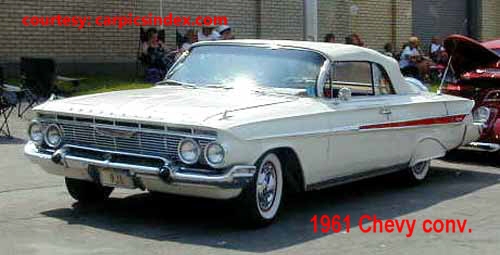
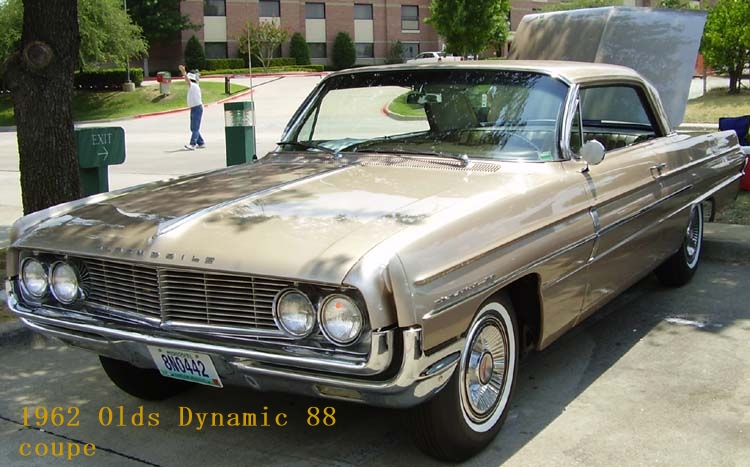
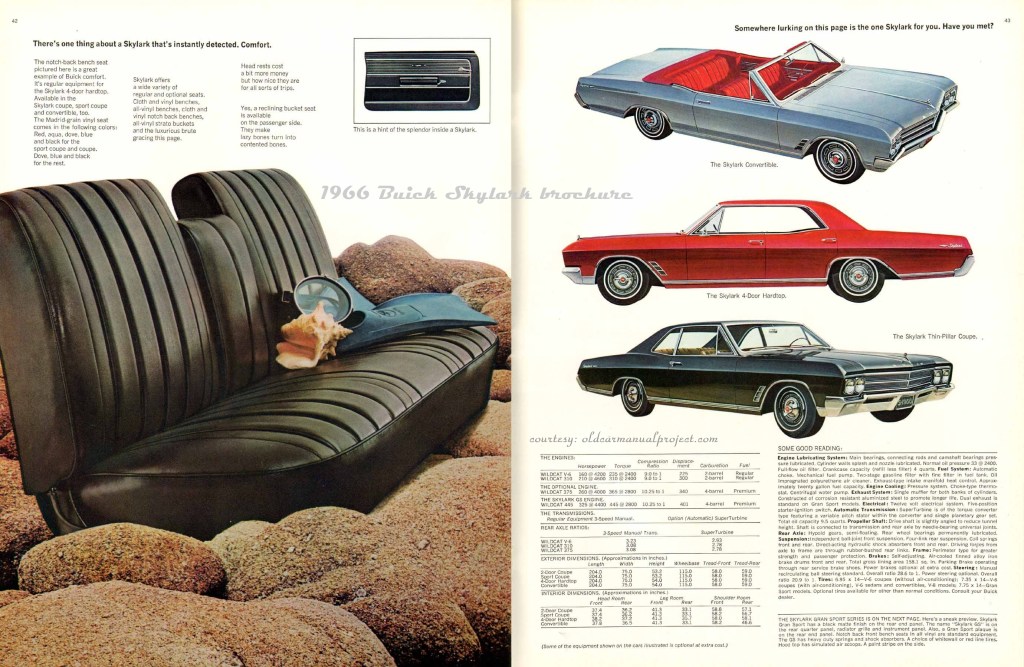
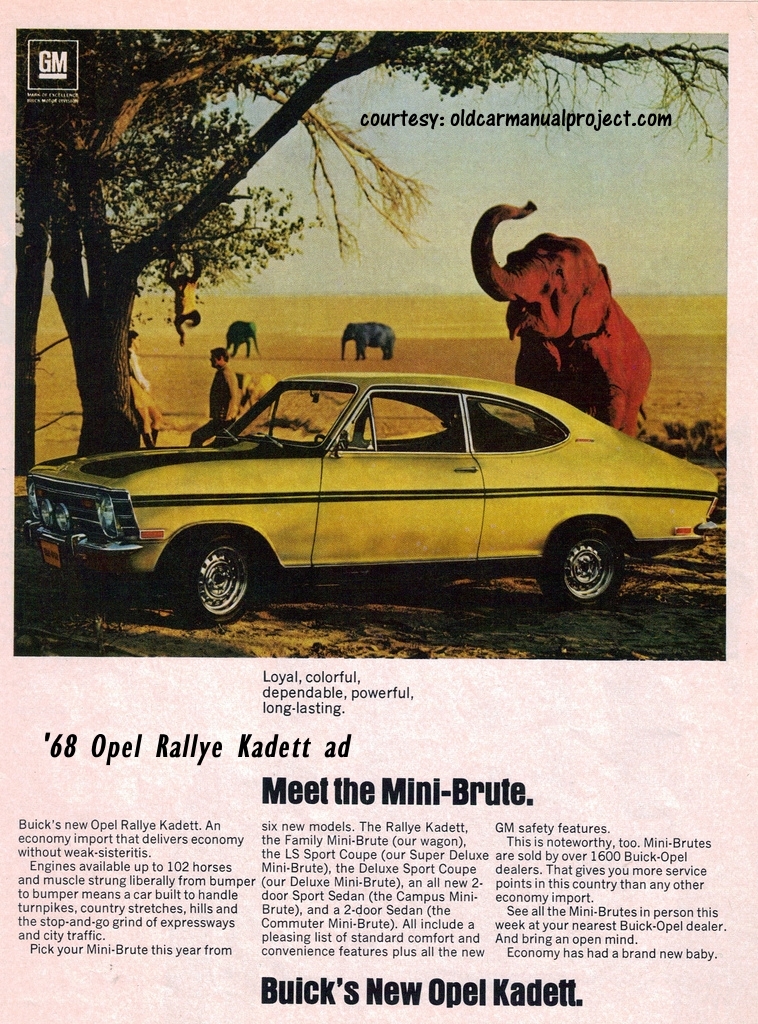
6. 1968-81: This period represents the break with my parents – I was on my own, after their graduation purchase for me, a 1969 Opel Rallye Kadett – yellow with black bumblebee stripes, matte black hood, fog lights, and a husky 4-speed manual transmission (cool!). They drifted back to their old Cadillac ways after retiring to Sun City Center, Florida. Presumably this made my mother happy, if not Dad. When I graduated from Kalamazoo College, I drove that Opel down to Florida (I had no place else to go) and began my career in librarianship at the Tampa-Hillsborough County Library System, after a brief (unsuccessful) attempt at teaching. Selling that Opel when I moved up to the DMV to attend grad school at UMd, I first bought a used (you guessed it!) 1964 Corvair 700 sedan. By this time, Corvairs were generally despised, known for many mechanical shortcomings and lack of reliability – my purchase was governed by low cost and nostalgia only! That Corvair only lasted a few months. By the time I got my M.L.S. degree and a decent-paying full-time job in the University of Maryland’s library system, I felt I could replace it with another (later-model) used car, a 1971 Ford Pinto.
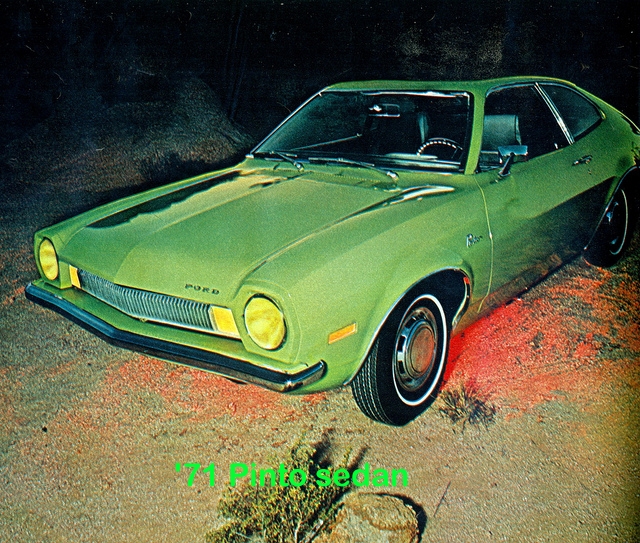
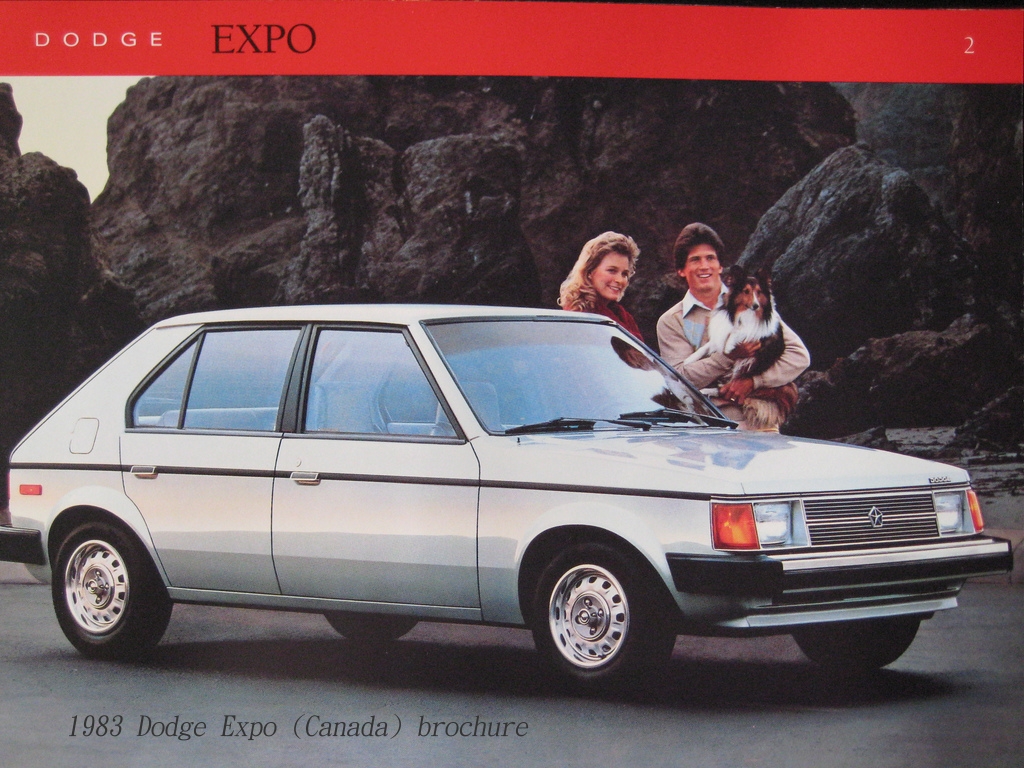
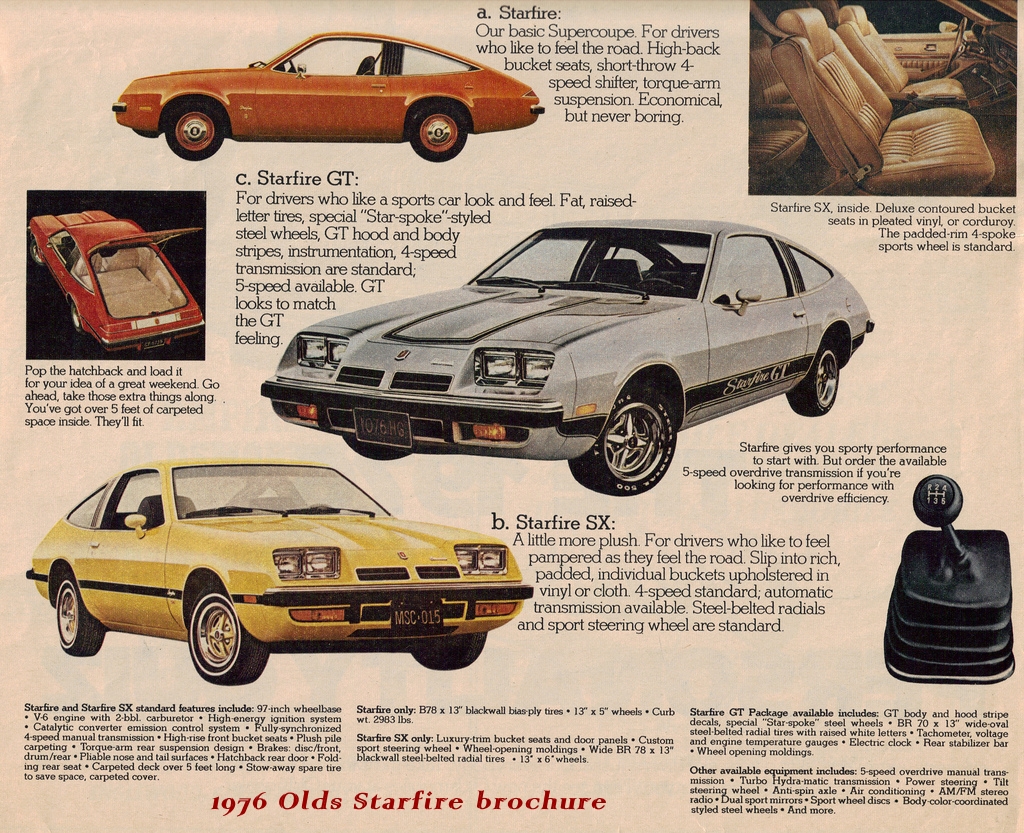
This car, in addition to being bright red with a manual transmission, proved more reliable than that Corvair. I kept it for four years, until my parents came to my rescue, basking in their comfortable Florida sunshine with new Cadillacs once again. They had become concerned with my well-being (and delay in finding a mate!). So, as they did in college, they bought me another car! (I did pay them for it at a heavily discounted price, after they owned it for only a few months.) It was a 1976 Olds Starfire, dark blue, nice bucket seat interior, with another manual transmission (now a 5-speed). Like that last Cadillac Dad had complained so much about when I was a kid, it proved unreliable, and I never got satisfactory service from local dealers. By 1982, I was financially secure enough to strike out on my own, buying a practical, yet well-appointed, NEW Dodge Omni.
7. 1982-92: Entering true adulthood, with family responsibilities, I finally left parental backing for my car buying behind. My wife (we married in 1983) now contributed richly to my economic picture. She had purchased, with my expert guidance, a new 1980 Chevette sedan (bright yellow with saddle interior, reminiscent of that 1961 convertible from my early adolescence).
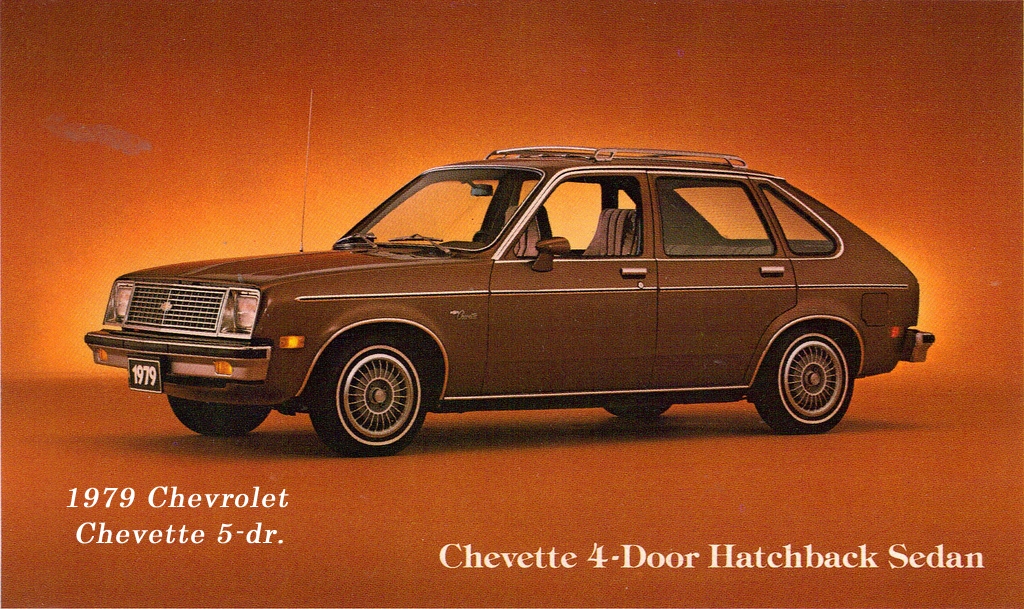
This Chevette even accommodated a car car seat for our elder son from his infancy through toddlerhood. We moved the seat between her Chevette and my Omni – which accomodated a second seat for our younger son. The next phase would see us becoming ensconced in the Arlington, Virginia social milieu of young families, the very epitome of the dual-income professional class which dominated our community.
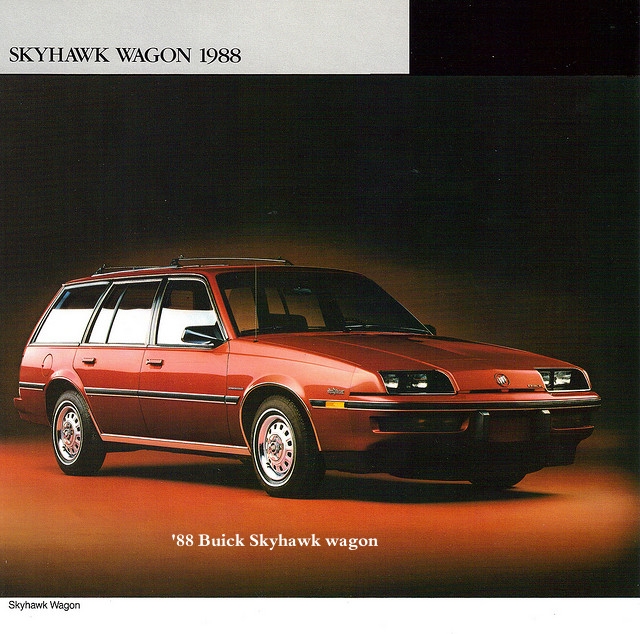
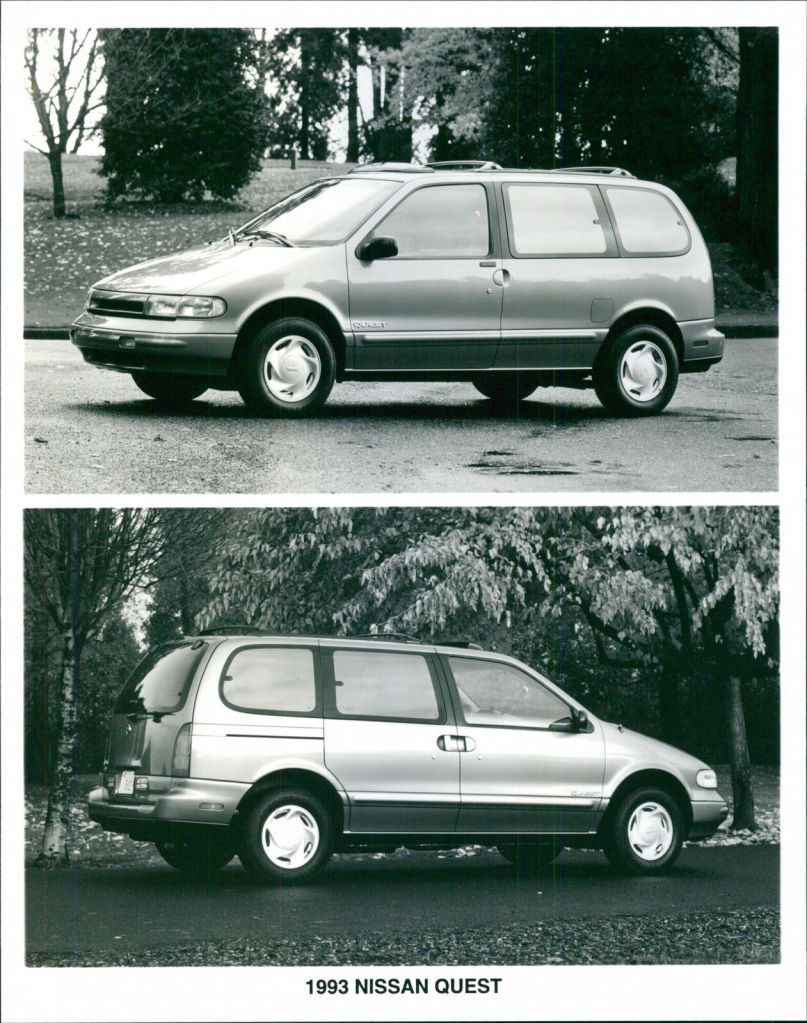
8. 1988-2014: One last “gift” from my parents was a 1987 Buick Skyhawk wagon, which, like that ’76 Starfire, was technically purchased from them as a used car after they had driven it for only about six months. This car was ordered from our specification of a “family car” – it was bright red with a gray fabric interior, good for the car seats, but not so easy to clean. It generally served us well, this “little red wagon,” making multiple road trips to visit grandma in Florida (Dad died in ’88). It was the second car with our official decade-plus turnaround time. The first “decade car” was that 1982 Omni which we traded for a new 1993 Nissan Quest — our entry into the minivan demographic. That Quest also made several trips to Florida to visit my mom, now remarried to Frank, a retired doctor. It became more difficult to count Mom as part of the family since she now gravitated toward Frank and that Sun City Center retiree set. Her last Cadillac was a 1992 Sedan de Ville. She and Frank then chose big Oldsmobiles and Buicks until the end of their driving days (2002). We, on the other hand, gravitated toward Japanese imports beginning with that Quest (even though assembled in the U.S.)
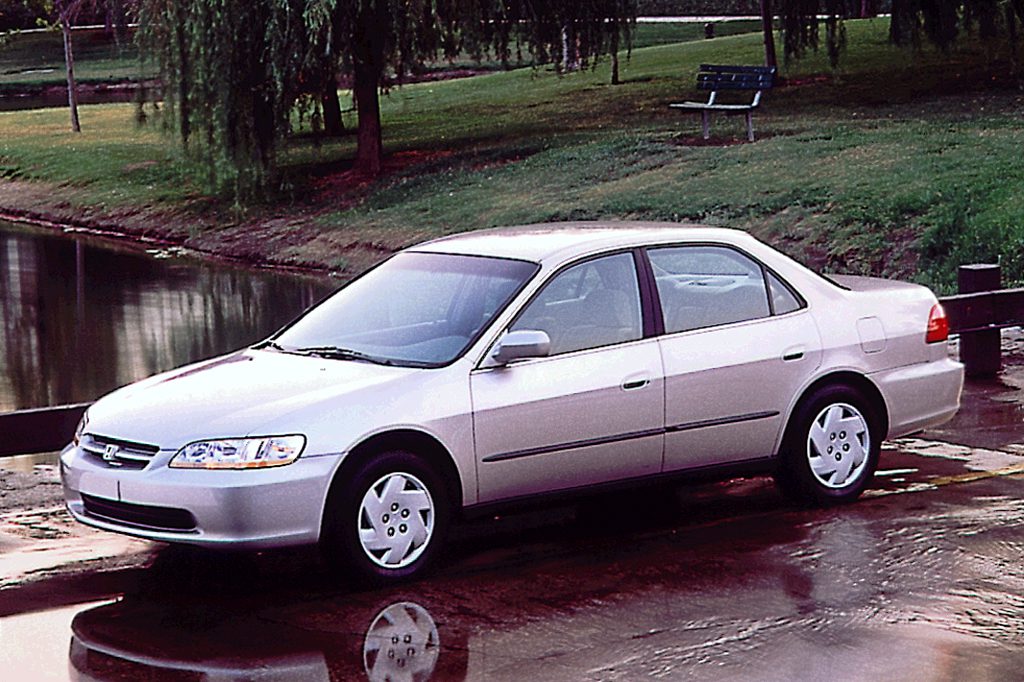
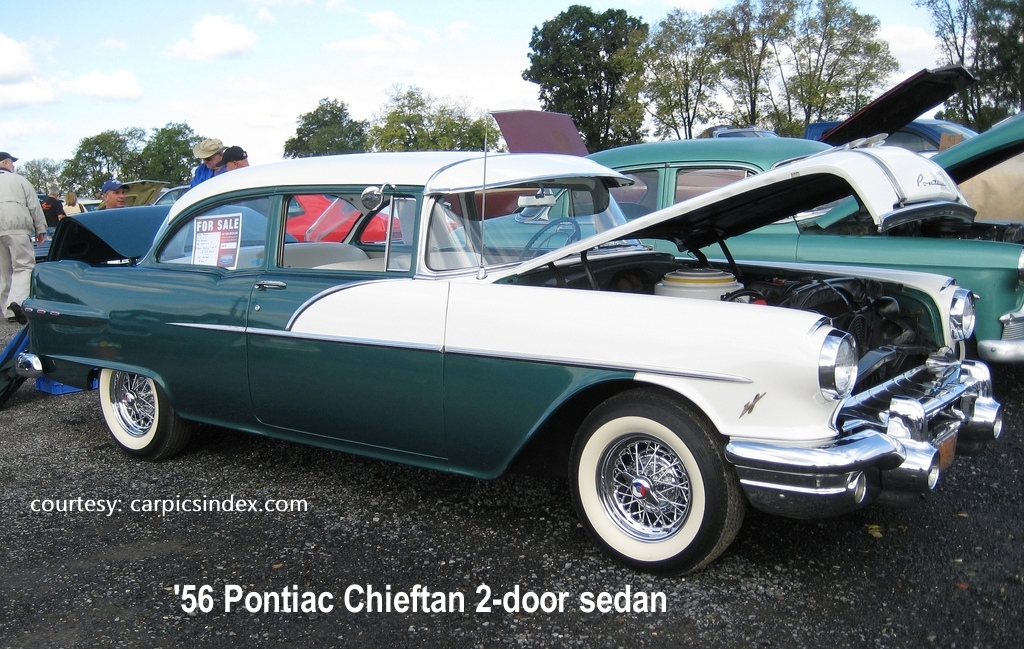
In 2000, we bought another late model used car, a ’98 Honda Accord, when our elder son got his driver’s license. He started driving that one on his own high school dates – although he didn’t mind being seen at school driving our minivan. Neither of our two sons could claim my high school senior year excuse (1964-65) to swing their own car; I needed a car of my own to travel around town during school hours collecting advertising copy from local businesses for the high school paper (as Managing Editor) – that task required a used 1956 Pontiac Chieftan 4-door hardtop with some local legend behind it, according to an older cousin who knew its previous owner. He claimed it had cadmium plated valve covers on its stock 317 cu. In. V8, and allegedly pilfered silver fleck paint job from the early ‘60s vintage Buick Riviera (stolen off the factory floor). It also had a drag-racing grade high performance rear axle – not great for gas mileage, but I didn’t really drive it that much even with the sub-$1.00 gasoline prices of the day. Our sons had nothing like this car!
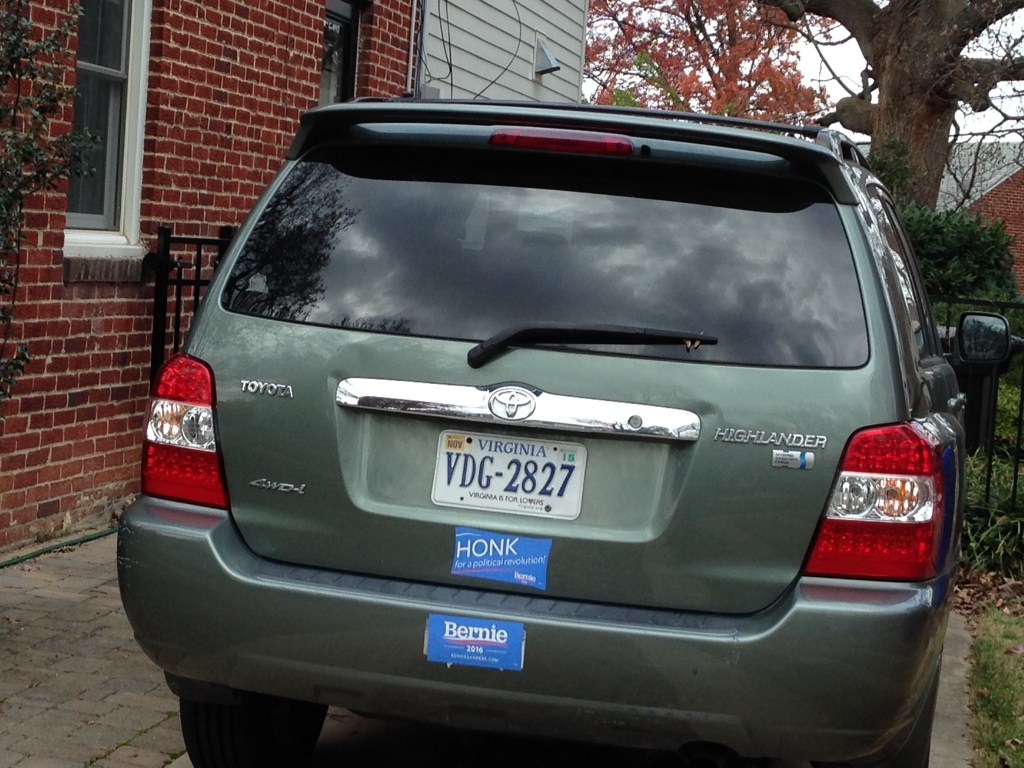
The decade-plus turnaround convention meant fewer cars during this period. We replaced the Quest with a (slightly) used 2007 Toyota Highlander – a gas-electric Hybrid! We were now cautiously advancing into the post-internal combustion age. We felt virtuous, despite an average fuel economy no better than our current non-hybrid Honda CR-V (its replacement). Following the example of our respective parents (wife’s family bought a car for her too), we bought late model used cars for our kids when they were in college.
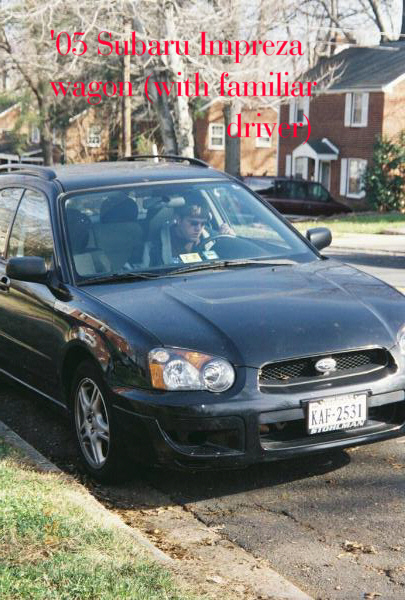
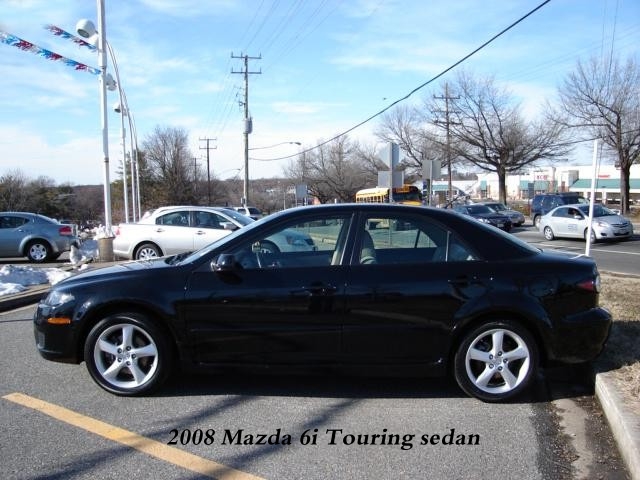
Elder son received a nice little 2005 Subaru Impreza wagon – which he truly loved, making him a Subaru loyalist for his next car (2016 Outback), plus his wife’s earlier purchase of a Forester in 2014, the year they married. Our younger son selected a year-old Mazda 6 off a Mazda dealer lot (black exterior and interior, deluxe trim level) – which he kept for twelve years, also following his parents’ example.
9. 2015-?: We now are in the final phase of our automobile buying life. When we purchased our current 2015 Chevy Volt in the fall of 2014, we were convinced by an expert salesman that it was an engineering marvel – the vanguard of the next wave of electric vehicles. Of course, that wave is still struggling to get off the ground, but we are assured it’s coming. The Volt was an engineering marvel when first introduced, keeping up that great GM tradition of revolutionary new concepts, even if lacking the best long-term investment strategy for the corporation.
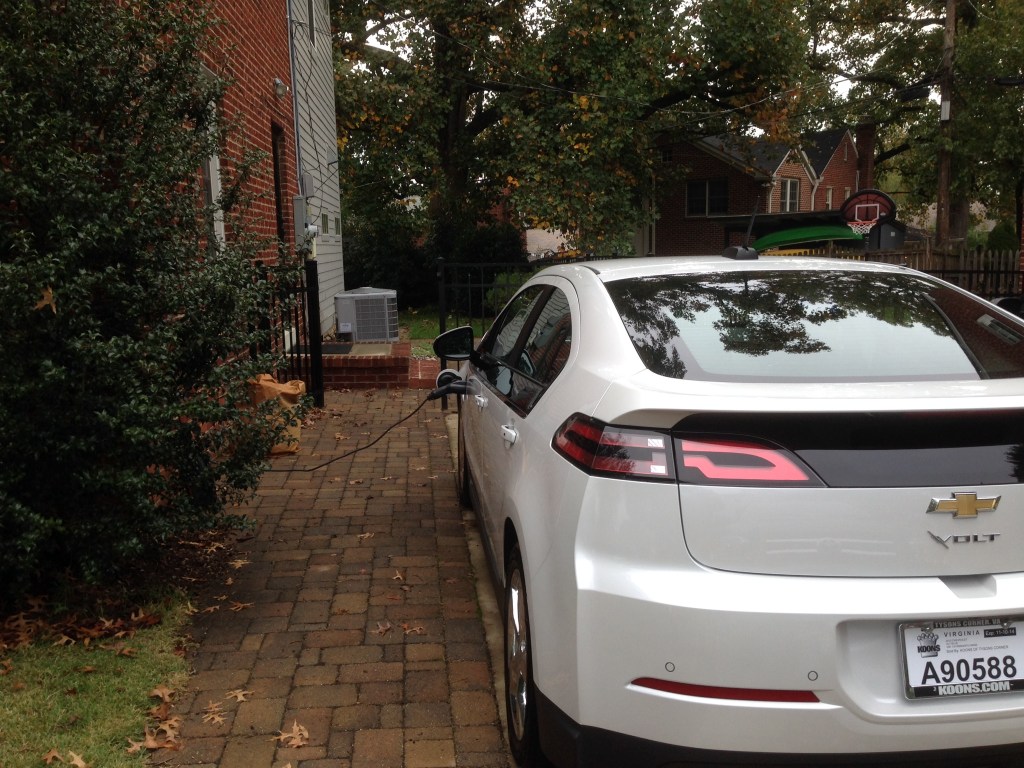
Unlike Corvair, however, no bad reputation for poor quality or low reliability dogged it; just that the General, even with its new leadership and supposedly leaner management post-bankruptcy (2009) chose to axe it in 2019. The Volt was the first widely available plug-in hybrid (PHEV), and our experience of nearly ten years with it has, indeed, confirmed that we really are in the EV age – we charge it nightly from an ordinary 120-volt outlet beside our driveway, and have probably not bought more than a quarter-tank of gasoline each year (when the automatic “fuel maintenance” cycle for burning stale gas kicks in annually). It has 50,000 miles on it, will likely go for another year or so before we replace it – most likely with a battery-electric EV, and Level II charger in our driveway.
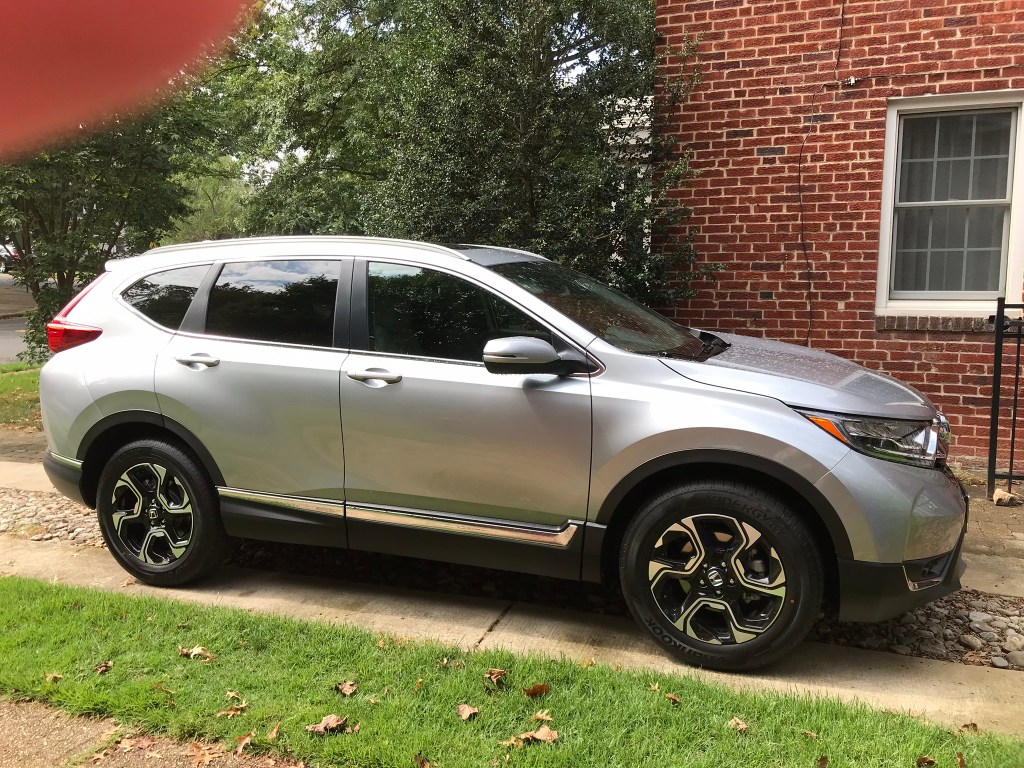
Then we will be done – we’re not anticipating replacing our 2019 CR-V, ever. We’ll sell it when we downsize to a continuous care facility. Then, presumably, driving will cease as well – allowing for the sale of that Volt replacement or gifting it to one of our offspring. The long affair with motoring, and vehicle selection, will finally be over. It will be the end of life as we know it, except for the reminiscence of what cars meant to us across many decades.
I confess I have never written a Warp & Woof post this long before. I hope it finds some readers out there. The only thing that might save it from being excruciatingly boring is the insight it provides into my lifetime of car-centric values and lifestyles. These cars were expressions of family tradition, economic realities, and social connection for all of us – my parents, my wife, our two kids, and (most of all) me. This piece is basically an expansion of another Warp & Woof post from 2017, “What We Drove, and Why.” Enjoy.
— William Sundwick
 Warp and Woof
Great memories. I switched to Mercedes about 35 years ago and have a tough time remembering them all. I currently drive a 1982 300cd with almost 300k miles
LikeLike