My Annual Exploration of This Blog’s Innards
It’s time. Two years ago, I wrote that I produced a post for Warp & Woof about “once a year (at least)” contemplating why or how I write. This year let’s not spend as much time on my motivations – they remain unchanged from last year’s “Creativity” piece or 2024’s “Why Do I Write?” Instead, now may be the time to look at my routine, the established procedure I’ve devised for all Warp & Woof posts. It’s still true that I do not use any popular LLM chatbots. And the principal reason for my shunning AI is that writing is an exercise for me – productivity is not its purpose! Nobody is paying me for posts, or otherwise asking for any quota. I’m happy with a publication cycle of two or three weeks – and that usually fits my therapeutic and mental calisthenic requirements reasonably well. AI tools would not contribute to that. My familiar routine has four discrete steps:
Step 1: What the hell do I write about?
Warp & Woof’s subtitle is simple: “Things that Matter.” Since that could be just about anything, something must spur my interest over the biweekly or semi-monthly calendar. I’ve found that I do better if I consider topic formulation over a longer period as a task by itself. I’m currently nearing the end of my list of 2026 topics, only two remain undone on this list, out of fifteen. While each of the topics in the list is numbered, I don’t necessarily write in the order I think of them – those last two uncovered topics are among the most recent additions, however: “EV Shopping” and “The Social Imperative.” The former will go on my Totems page (cars and car-culture), the latter either on the Present page (psychology) or the Past (if it’s more sociological). All topics on my list are elaborated with bullet points for each. Five, six, or seven bullet points usually exhaust what I was thinking about when first I came up with the idea. They are useful because I may not advance to Step 2 or Step 3 for many months. Generating this list of topics is my first encounter with Writer’s Block. There will be other blockages to come.
Step 2: Picking the topic and refining it
My next encounter with writer’s block is when I try to select which of my topics I will tackle now. I have never outgrown high school outlines (true confessions) for writing. I still use classic Roman numerals for main points, capital letters for subdivisions, and Arabic numerals for further points – each marker must have at least two cases on the same level. Some capital letters may not have subordinate Arabic numerals (if I couldn’t think of more than one subordinate item in the superordinate point). This is what I call “organization” for my piece. The trick I play on myself is that, since there is no judge over the quality of the organization except me, I don’t feel I am committed to this outline when I finally get down to writing the first draft. That draft may jump directly into Roman numeral III, subpoint B., then ignore Roman numeral I … or put Roman numeral II at the end. In high school and college papers, I did not feel so free and loose. Perhaps I’ve matured … a little? Nevertheless, the outline still performs the role of thought refiner – elaborating on the bullet list, even changing it substantially. It is my outline that spurs serious research, the next step.
Step 3: Can I really get away with saying these things?
I have also never outgrown the need to support my contentions with research – as an undergraduate history major, and steadfast consumer of journalism and punditry to this day, I cannot condone spouting pure bullshit. Therefore, both before starting my first draft, and subsequently, I must provide links to something – either something I’ve previously written, or a Google citation. Here, Google has probably made some improvement recently with its Gemini-enhanced searching, but I still will cite the original source in my piece. I bear no grudge if my research forces me to alter, or eliminate, a statement I’ve just made. It’s all part of the game, and it doesn’t happen often. Wikipedia entries are my favorite sources – they’re extensive, largely unbiased, and maybe too long for my audience to read, a possible benefit! Thanks to former Writers’ Groups for endorsing my citation style.
Step 4: The drafts
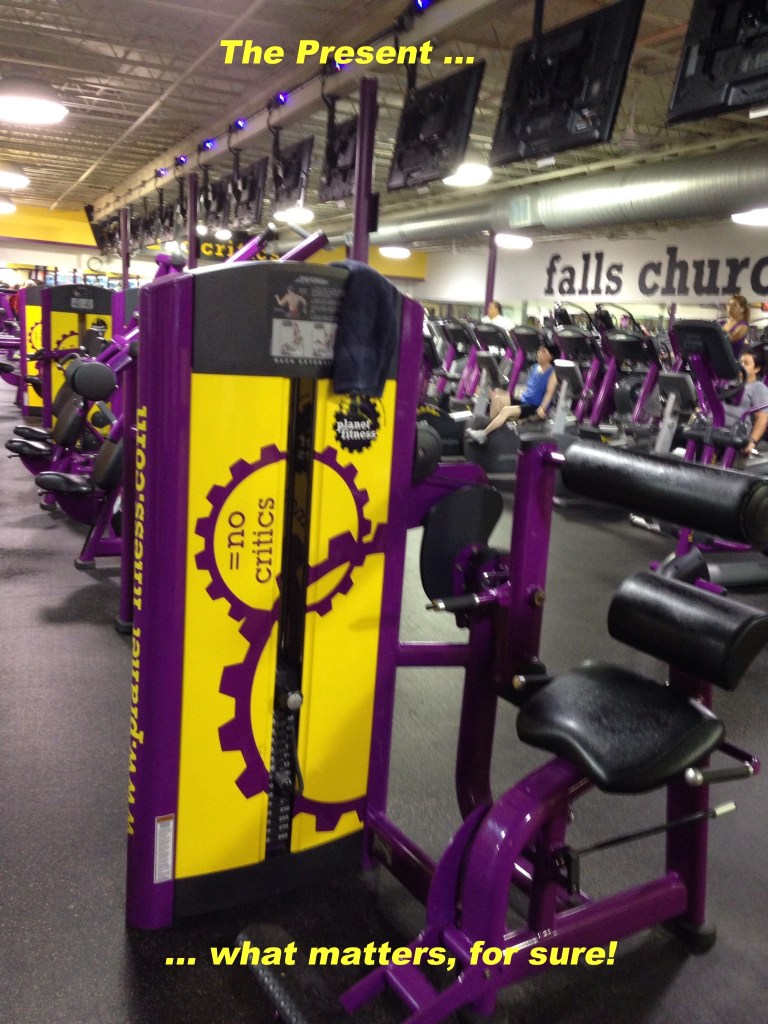
When I get to the point of finally writing, I can feel the endorphins surging. My first draft is typically completed, at roughly 1000 words, in one or two sittings. But there will always be a third bout of writer’s block here. I can only “do the deed” after some wishful false starts, or multiple consultations of that outline, head-scratching, and maybe taking a break. After the first draft is complete, I am usually wholly unsatisfied with the result. This piece is dumb, too personal, too trite, whatever. Then comes the second draft, where I both improve the aesthetics of my prose, and insert those research links (often doing more research to support the outrageous assertions I’ve made). Following that is a third and fourth draft – further enhancement of prose elegance or just changing my mind about wording. My rule of thumb is that I publish after the fourth draft. More than that would be mere compulsiveness – can’t imagine it would really improve the quality of the product. It always goes on the appropriate page of Warp & Woof on WordPress, after adorning it with tags (usually 10-15 key words), and displaying below its title the logo for the page it will live on (this one, The Present, is a photo of my gym). For topics that I think will be compatible with what I see in my Medium Daily Digest, I publish there as well.
Once I publish, I do some limited promotion – on Facebook for my friends, on Bluesky and on Threads (williamsundwick). That’s it; no more promotions. It’s on to the next topic! How would an AI chatbot possibly help me?
— William Sundwick

