Causes and Cures
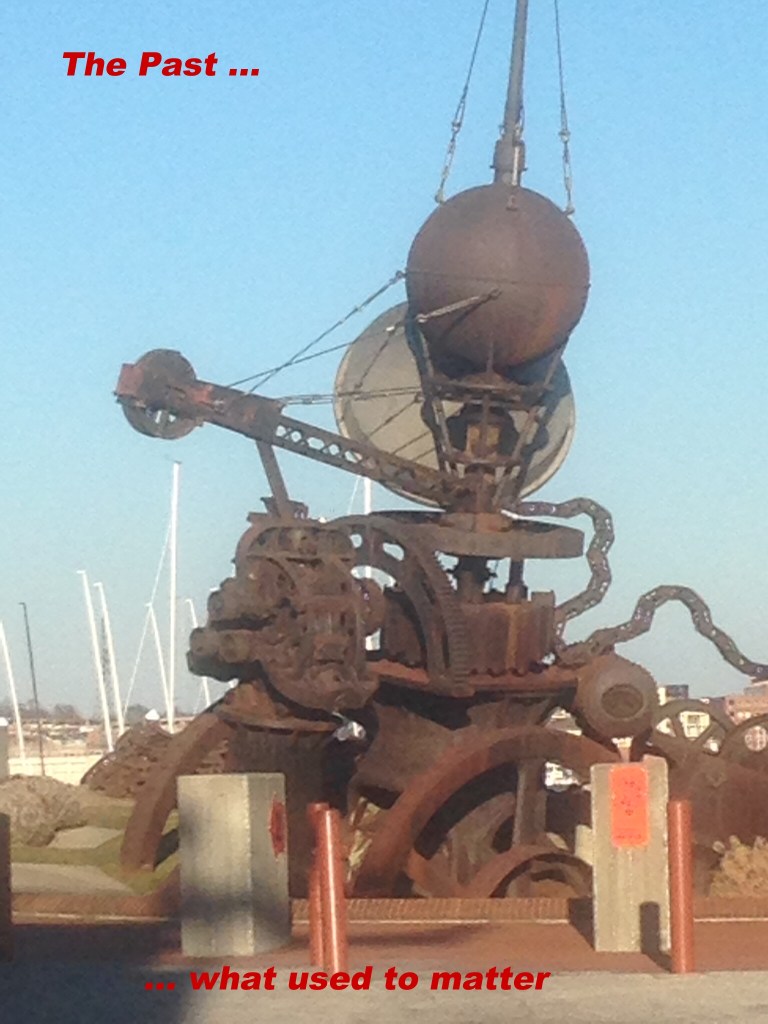
Thomas Hobbes famously decried the “state of nature” absent a strong monarch, where people’s lives were “brutish and short.” His statist view evolved over the succeeding centuries. Bureaucracy became the basic building block for the modern state – it was the stand-in for the monarch. And it was the mechanism by which the monarch exerted control. Loyalty became critical, and the moral justification was to save the people from anarchy.
In all sizes and types of organizations, the measure of a leader’s effectiveness is how well its bureaucracy functions. Often, a seamless transition from one leader to the next is how we define successful regimes. Yet, the Second Law of Thermodynamics affects organizational stability as well as physical phenomena. Things tend to fall apart over time. The bureaucrat’s goal is to infuse enough energy to counter that entropy as much as possible. Loyalty to leaders is important, but most organizations also employ additional tricks. Bureaucratic efficacy is what separates long-lived empires from mercurial failed start-ups.
Some of bureaucracy’s tactics for forestalling decay include the following:
Dedication to a common goal within the organization: besting the competition, certainly, but it also helps to believe in the good works of the organization – people generally want to see themselves performing a service or producing a product that benefits the customer. Over- emphasis on profit is a selfish motive and does not lead to anything so much as further deterioration of organizational cohesion. It is a primary cause of insecurity, turnover, and difficulty in recruiting talent. There must be a greater good.
Camaraderie among the members of the group: this comes from various sources beyond the goals of the organization – common cultural background, encouragement of mutual trust among group members, social activity beyond the workplace, to name a few.
Stability and safety of the organization: ideally, an organization with few identifiable adversaries is the safest kind (i.e., no competitors). Of course, there will always be externalities – political and economic factors can never be discounted entirely – but members of the group ought to feel that the probability of imminent collapse is low.
Coherent plans and methodologies: successful bureaucrats need to be rational actors, themselves, and communicate to their group a rational operating routine that is understandable to them.
Occasional (but not too frequent) reorganization of group: group dynamics are such that, from time to time, a refreshing boost can be given to an organization by altering, not just hierarchical structure, but the physical environment of teams. Moving an office to a new floor, or new building, can revitalize it. But changing too often can be more disorienting than energizing – better to have the existing work group “break in” a new leader than to hire a new leader and then rearrange the group membership accordingly. Of course, the organization’s mission can change over time – and reorganization may be required – but if that mission changes too frequently, general deterioration of the enabling bureaucracy is bound to accelerate, alongside morale reduction.
My observations over many years are that organizations who adroitly manage these factors last longer than those who fail at one or more of them. But then, it may be that a long lifespan for the organization is not a priority for its leadership! If any monarch is more interested in quick profit – or some other lightning-like result (say a single election in politics) – then all bets are off. Bureaucracy may be a hindrance to such goals. Bureaucratic decay might be the real goal! The faster the better. Hobbes would disagree, but Karl Marx … or Mark Zuckerberg (“Move Fast and Break Things”) and Elon Musk (DOGE) not so much. Marx and Engels called for worker revolt but still felt that a state bureaucracy was necessary in the end, even post-revolution. Lenin created just such a bureaucracy – and Stalin enforced it brutally. That bureaucracy fell into decay, ultimately ceasing to exist, after about 70 years. Other state bureaucracies, like China’s, seem to be more adaptable – are they better followers of the principles above?
I’d be inclined to say that the character of the leader is key to the success of the bureaucracy. (The current U.S. administration does not exactly inspire confidence.) On the other hand, a large institutional bureaucracy like General Motors lasted 100 years or more by following reasonably consistent goals and occasional reorganizations under boards of directors with changing personalities (though perhaps all cut from the same cloth?) – it was a good run. Our U.S. Constitution is approaching 250 years, but its underlying bureaucracy has evolved (and enlarged) remarkably over that time. Are the Republic’s goals the same? Is our leadership collapsing, or is it something deeper? Are Zuckerberg and Marx and Lenin really the ones on the right track? Even Christianity foresees Armageddon, a rebirth from the ashes. Perhaps we’re back at that Second Law of Thermodynamics – our time is coming to a natural end.
But even the Christian apocalyptic vision does posit a rebirth, a revival. Elon Musk’s “slash and burn” ideology, like Attila the Hun, may be necessary for whatever is coming – presumably something better. Speaking for myself, I’m still looking for the outlines of that new better system. They’re not clearly visible through the dying embers of the current one. Yet, I know what my life has produced, and it provides some direction for a near-term future I can follow. Presumably, my readers can do likewise. But few of us possess the foreknowledge necessary to accurately predict the shape of anything beyond “near-term.” Visions of a longer-term future are helpful, though; they aid the existing bureaucracy in developing medium-term operational plans, which could lead in a beneficial direction. If we keep that greater good at the forefront of our thinking, we can endure more insecurity in the present and reinforce the morale of our teams. Still, the ideal is for the long-term goal of any organization to remain relatively stable – surely, changing it every four years with each presidential election is not productive! Better to look at those long-lasting bureaucracies, 70-year, 100-year, or 250-year, for direction. Even if the thousands of years of major organized religions is a bit much (their goals become fuzzy over time, anyway), a good understanding of history and sociology can be an immense asset in finding a cure for bureaucratic decay. (Unless you’re convinced that the anarchy of institutional decay is the preferable state …)
— William Sundwick

