… I’m Cautiously Optimistic
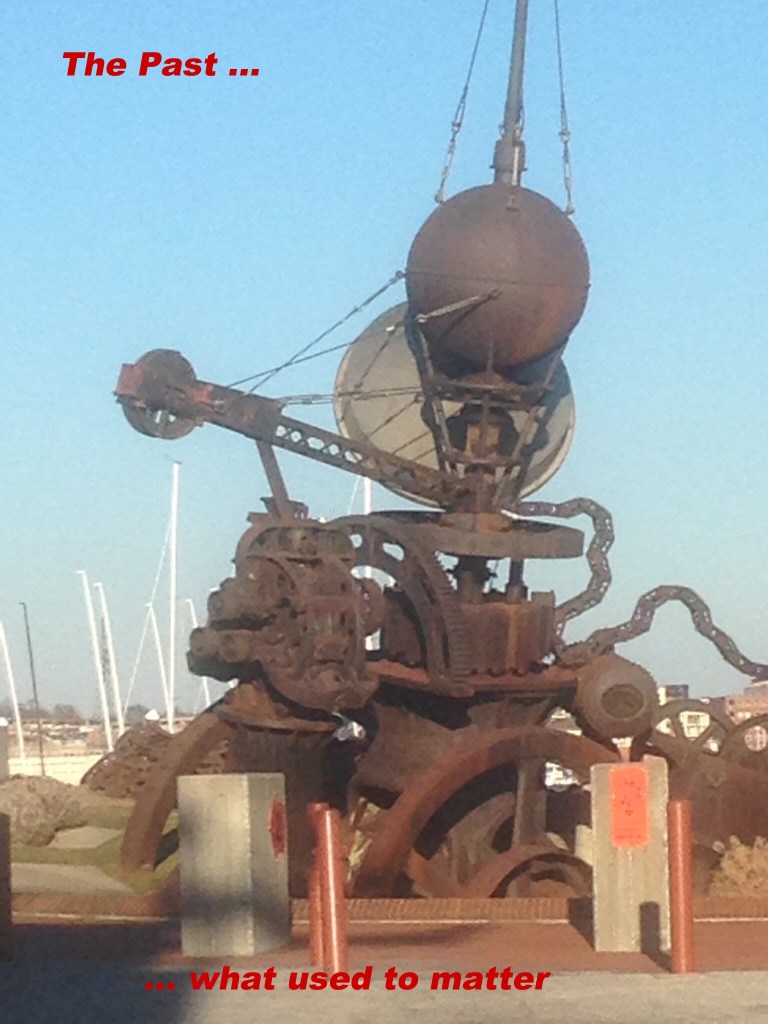
As a wannabe historian/social philosopher, I’ve long entertained fantasies of prediction. The reason they are fantasies is I’m not equipped with enough data to make real concrete projections – the kind that might influence policymakers. Let’s call them exercises in imagination informed by my general understanding of historical trends.
Predicting what the world will look like in 100 years is, for the historian, a “medium term” project. “Short term” predictions are based more on actual political and technological developments, as well as a solid sense of economic externalities – with probabilistic weight given to certain outcomes over the next five, ten, or twenty years. “Long term” prediction is usually the domain of the physical and biological sciences – dealing with things like the extinction of the human species, or at least the end of technological civilization. It deals with time frames of hundreds or thousands of years.
“Medium term” projection is easier than either short-term or long-term. None of us will be alive to test its validity, yet we can apply “lessons” from history – as we understand them. You are free to accept or reject the conclusions. Nobody will be the wiser!
So, here is my shot at some medium-term predictions for the next century, based on what I know, presume to know, or hope for … they are all in the range of “cautiously optimistic.”
Prediction #1: What we call “Western Civilization” will still be around and be recognizable!
We have thousands of years of preparation, from Old Testament days, through multiple Ages of Empires, and at least 600 years (really a lot more) of steadily increasing sense of personal worth and capability as a species. There is no reason to think that any likely external catastrophe, or our own stupidity, would bring all that advance work to an abrupt end within a mere 100 years! I do not predict the extinction of either our accumulated civilization or our biome. This separates me from the doomers. As far as our dominant intellectual philosophy goes, I believe in an evolving world view over the next century emphasizing cooperative rather than competitive behavior as the primary force for survival – and progress. I won’t give it a name just yet, but I think it’s a philosophy that has its origin at least a couple centuries back. The reason I won’t name the philosophy now is that its “ism” designation will likely change over time – the norm in western philosophy, anyway. But our rich history will guarantee that our grandchildren and great grandchildren, still alive in 2124, will be comfortable with it, reinforced by their own collective education, and their parents’. It will comprise recognizable social and moral values.
Prediction #2: As always, technology will be seen as the key to improving life and social conditions.
Money will continue to flow into the technology sector of society. Research will still be considered important. I will not attempt to define what fields of science, or what new problems to solve, will emerge over the next 100 years. But problems will continue to be solved. And the efficiency and efficacy of the research is likely to improve, not diminish (yes, count on generative AI). I predict an explosion of scientific research, in fact – despite some loud voices now expressing doubts. Going a step further, I see greater international cooperation in scientific research (enabling ambitious “moon shots”). Jealousy and national security fears will diminish over this period. There may even be a supernational research body (probably growing out of some United Nations initiative). Science will become a public good – cooperative rather than competitive.
Prediction #3: The Abrahamic religions will become unified in purpose, if still sectarian.
We all know that wars of religion ended several centuries ago. Now is the time for all the world’s great religions to accept that they are not in competition for converts – Christians, Jews, Moslems (perhaps less so Hindus, Buddhists, etc.). There will still be sects within each, but these will generally be seen as cultural/linguistic/social class groupings – a matter of personal preference, not any universal right or wrong. To extrapolate further, the unity in purpose of all major world religions will likely inform a change in geopolitics. Nations will compete for markets, but the populations of the world’s great powers will all grow to understand that the realm of the nation-state is material, not spiritual. Indeed, ethno-states (and theocracies) are probably peaking now, and will only diminish in importance. The difference between cultural particularism and facilitating a nation’s material well-being will become plain to a much more unified human species. Unfortunately, a decline of geopolitical struggle among great powers may only occur after some cataclysmic war. As with previous world conflicts, this one will have a victor who determines the medium-term direction for the vanquished societies. My (hopeful) prediction is that this conflict is figurative, not literal – fingers crossed, no nuclear weapons exchanges! But it will surely entail painful political realignments.
Prediction #4: Global geopolitics will become more complex with multiple actors, not merely two!
My 100-year time frame will see more than one geopolitical struggle – or competition – not necessarily only between the United States and China. I think it’s likely that, by 2124, what we now call the “global South” will have reached a level of development where the major competitors in the world are all located in Asia and Africa (maybe South America). North America and Europe will remain important markets, but not the primary producers of goods or services. Again, as with Prediction #3 above, it’s possible that some bloody war may transpire in the interim to establish the new world order. If that conflict is limited only to trade competition, we will be grateful. None of my predictions, you may note, deal with any terribly disruptive physical condition of the planet. I’m assuming that one big motivator for my optimistic cooperativeness projection will be that very fear of apocalypse – the growing consensus that “we’re all in this together.” That fear will spur the historic culture preservationists, the scientific research advocates, the unified religious purpose, as well as a new multi-polar geopolitical environment. Mass climate migration will become the primary geopolitical challenge, leading to unprecedented efforts toward adaptability, and thriving, for vast swathes of the world.
I could probably generate more predictions, but humility and lack of knowledge prevent me from delving into areas that don’t support my “cautious optimism” so neatly. Without indulging too much in my philosophical sources, I will suggest to readers two that lately have had some impact on me. Try reading Peter Kropotkin’s Mutual Aid: a Factor of Evolution (published in 1902) and catch Nathan Robinson’s Current Affairs podcasts. Whether I identify as a Kropotkin-style anarchist (cooperation beats competition every time!) or a “libertarian socialist” like Robinson (easy-going acceptance of multiple strands of left-wing thought), varies from day to day. I think Karl Marx made a grave error when he expelled Bakunin and the anarchists from the International Workingmen’s Association in 1872. But there has been an unmistakable trend over at least the past 150 years toward SOME version of what those 19th century thinkers were seeking. I claim that the next 100 years will vindicate not just one of them, or their ideology, but will birth new ideologies having essentially the same goals: improving the material conditions and the dignity of all members of our human species.
— William Sundwick
 Warp and Woof
3 thoughts on “The World in 2124”