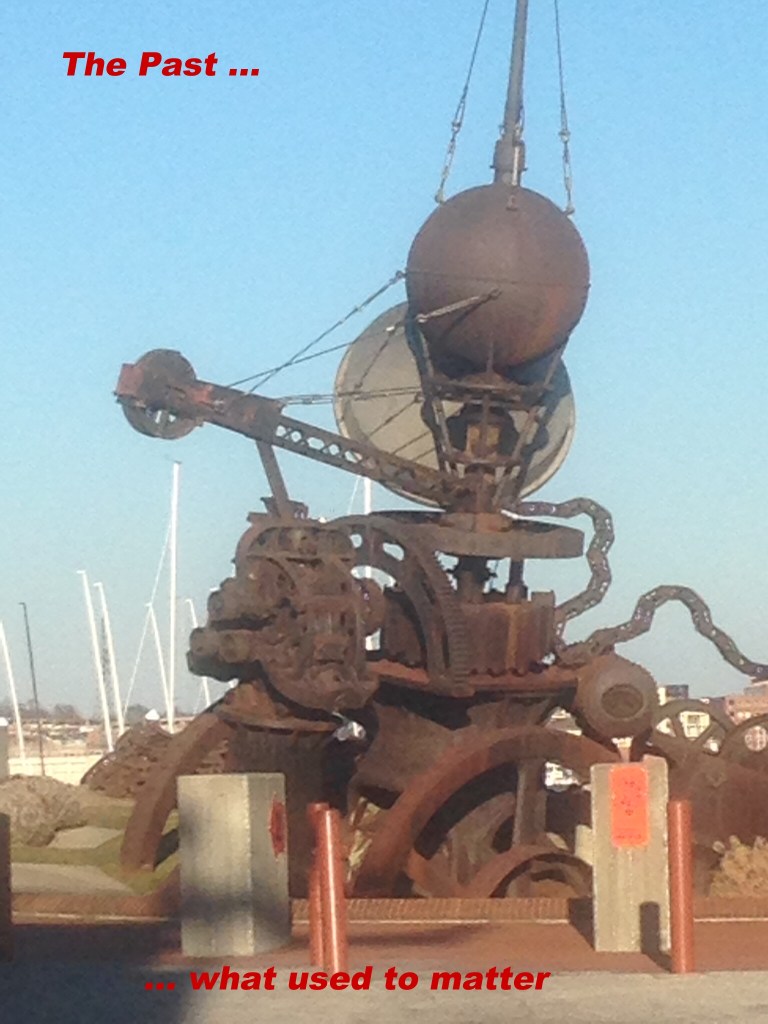
I know. Lots of commentary these days on the “death of liberal democracy” – sometimes extended to encompass a demise of the whole of Western civilization over the last 350 years. It seems Donald Trump’s second term has terrified many who see MAGA as a powerful force for the future, rather than merely a contemporary reaction to social weaknesses they dare not name. The same goes for much European, Latin American, or Asian politics likely influenced either by MAGA in the U.S. or Vladimir Putin in Russia. Is all the current political turmoil on the right really a sign of significant erosion of our entire Western intellectual heritage, liberalism broadly defined? And where is the left in this turmoil?
For sure, liberalism as it has come to be understood in all those Western “democracies,” may be struggling right now, in our technological age, but what does it portend for the future? Are we really prepared to surrender beliefs in human dignity, equality, representative government … perhaps rationality itself? These, after all, are the underpinnings of what John Locke originally posited after the 17th century English Civil War. The right seems to value only power and the ascent of a strongman. The population should not be consulted by its leaders, but rather manipulated … or even compelled! Meanwhile, the left’s critique of liberalism fixates on the problem of property and its ownership. Adam Smith is their primary villain – but what did he really say in The Wealth of Nations?
Somehow, we must come to grips with an assessment of our civilizational foundation, then project what comes after. First, three definitions:
Freedom: We now accept that different segments of society have different ideas about what constitutes “freedom.” Is it mostly about freedom of speech, the press, religious beliefs? Or is it primarily about freedom to buy and sell — property rights? Those two different emphases mark the divide between what we understand as “social liberalism” (i.e., the Libs) and “classical liberalism” (i.e., traditional Republicans and neoliberalism). Sometimes, MAGA acts like “freedom” is a concept closely tied to victimhood – imposed upon them by “woke” society.
Equality: Among Christians, Jews, Muslims – and perhaps all major religions – equality of all humans before God is a given. The Enlightenment in Europe in the 17th and 18th centuries expanded the notion of “equality” to include equality before the law. A nation’s laws should reflect this both by their writ and their enforcement. Insofar as all Western nations are allegedly governed by law – via constitutions – equality becomes a guiding principle for all. Locke, Montesquieu, Hobbes, all agree that civilization must be governed first and foremost by law … rather than fiat. Of course, laws can not only be changed but also interpreted. Liberal societies depend upon courts for this – and the tension over interpretation can be as great as the belief in “original intent” might imply. Classical liberalism usually is satisfied with equality of “opportunity” whereas social liberalism puts greater emphasis on equality of outcomes among various interest groups.
Property: Tied intimately to the issue of freedom and to the primacy of human aspirations which all liberals subscribe to is the notion of property rights. Here, the left has raised the strongest objections to liberalism, as it has come to be understood in the West. Karl Marx is usually credited with the main critique of property rights as the basis for liberal society. He built upon Adam Smith’s acknowledgement of the tendency of wealth to “trickle up” to the top rather than to be equally distributed to all. It took Marx to formulate a philosophy around the need to counteract that “natural” tendency. It became the fundamental flaw of capitalism – not the divine right of monarchs or the inherited property of aristocracies – and, while various interpretations of Marx have disputed what he really anticipated for the future of capitalism, they all concede that “there must be a better way.” In the 20th century, economic thought diverged into what has become a strident libertarian strain tracing to Friedrich von Hayek (absolute market supremacy) and Marxist-Leninists who thought abolition of all private property (i.e., capital) was society’s goal. Modern liberals believe in a measured compromise between these views. John Maynard Keynes is considered the philosophical mentor for this – a model “social liberal.”
Once we look at these definitions, we might be able to start thinking about that question: “what comes after” liberalism. I’m a great believer in building on past philosophy, rather than outright rejection of past paradigms. So, liberalism to me clearly has problems; especially as we move through the current century, likely to be dominated by AI and questions of executive control over society. Fascism can’t be the solution – where only the individuals or groups blessed by the guardians of state power can rightfully claim influence – and neither is the anarcho-syndicalist holdover of Marxism-Leninism where we all live in communes with no personal property or individual worth. My predisposition has always been toward that Keynesian compromise – I’m a social democrat at heart – accepting most of the underpinnings of liberalism but choosing central government as the arbiter of disputes over wealth and equal distribution of resources. I don’t think that the neoliberal tendency of the last 50 years toward greater concentration of wealth is a good trend. It should be mediated, if not undone, by a government which is accountable to duly elected representatives of the people. And all the people should be treated equally, with equal access to the democratic levers of power (voting). I’m against regulatory capture, as much as I’m against the growing ability of great wealth to influence voting (like financing candidates). Yet I’m also protective of my own intellectual heritage – I’m suspicious of alien philosophies which appear to be diametrically opposed to my beliefs. These alien world views include many religious groups, and even some local jurisdictions who control things like school curricula. MAGA is the foremost alien ideology in America today. I can’t get away from the idea that these people are my enemies.
So, where does that leave us with the future of liberalism as we know it? I have my own idea of what liberalism means, and it is good. Others may be as committed to their own ideology, which maintains “liberalism” is bad – apparently, they inhabit both the right and the left ends of the political spectrum – and I only hope that the combined social power of those who share my intellectual orientation will prevail in the end. If there is any doubt, I guess it’s up to me to find ways to improve their chances! But for now, that quote from Mark Twain sums up liberalism’s condition.
— William Sundwick
 Warp and Woof