A Theory of History for Our Times
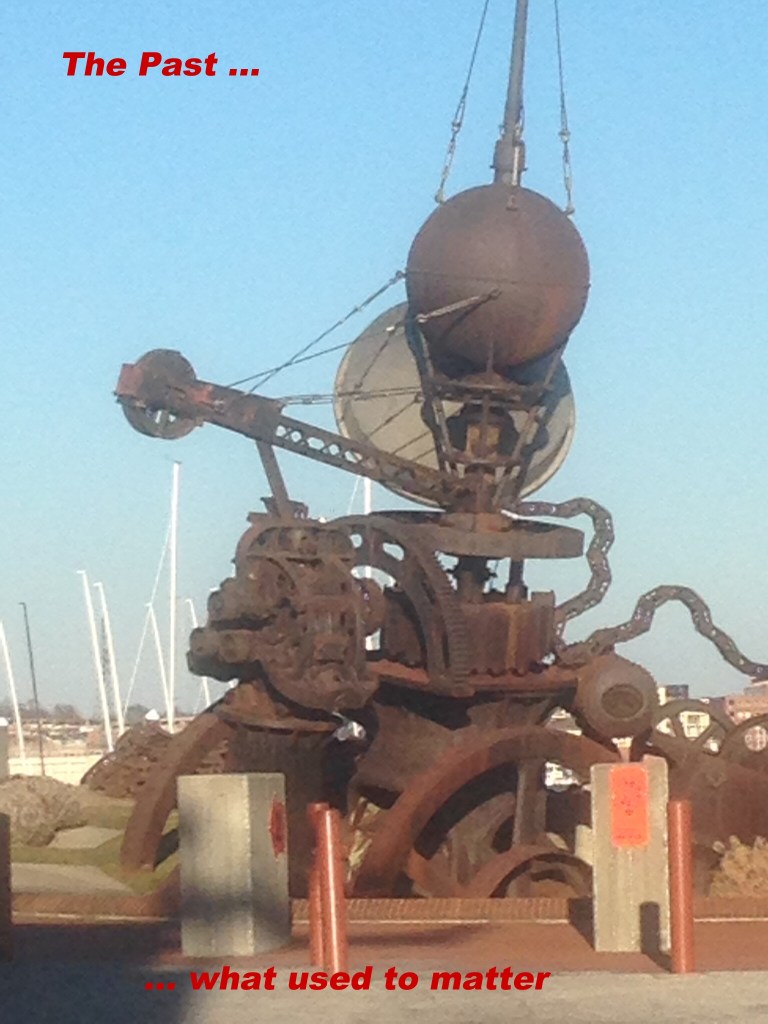
History is not a science. Its study, though academically formalized, and clearly based on research and evidence, does not really follow “laws.” History, as anybody in the field will tell you, is more storytelling than empirical truth. It does not “repeat itself,” except in the structure of its explicating narratives. So, how can we say history predicts our future? Our institutions, our norms, and our beliefs are no more substantial than the stories told by our most popular historians – whom we begin reading in childhood.
But, since the dawn of the age of reason (400 years ago in the “West,” longer in China and India), we have always been predisposed to seeing the unfolding of history as a quasi-scientific certainty – governed by laws of human nature, or our gods. Philosophers have conceived theories of history based on these suppositions. We all want some rigor about “what will come after.” Even if essentially probabilistic, it’s better than complete ignorance.
So here we are. What does our current political environment portend for the future – near, medium term, or long-range? What about technology? Science warns us of ecological collapse, so how long do we have? We all want certainty – or at least a good guess at probabilities. Can emergent properties produce truly unexpected outcomes for history? What about entropy? Are things bound to “fall apart”?
Charles Darwin constructed his enormously powerful analysis of natural order in the mid-19th century. He was so influential that a generation of social scientists followed him effectively applying his theory of Natural Selection to the history of civilization – we call it Social Darwinism now. Strength, ability to overcome adversity, adaptability, became the key to societal longevity and flourishing. Not bad for the times, and some still like Nietzsche’s concept of Ubermensch.
Then there was the peculiar amalgamation of Darwinian thinking and technological advancement that led to tremendous amassing of wealth in the second half of the 19th century in Western Europe (and the U.S.). Karl Marx and Friedrich Engels sent another generation of “scientific” historians on an adventure of projection regarding the future of their social structure – what they called “capitalism” (after Adam Smith, in the 18th century). The subsequent love affair with socialism spawned many debates about history for nearly 100 years. It was the dominant issue confronting the world’s societies, at least through the late 20th century. But I can now see another trend in theories of history. Let me elaborate.
First, there was the impact of historians on theoretical physics. Yes, quantum mechanics seems to me to be the application of the long-standing practice of historians, storytellers by nature, to create multiple realities from the same evidence. Any phenomenon in time and space depends upon measurement, say the physicists. Something can literally be in more than one location at the same time! (In Einstein’s words, “spooky action at a distance.”) This is how we currently understand the universe. Not too surprising for historians. Historians have always been enthralled – or captured – by alternate interpretations of the past. If not measurement, or observation, as the physicist sees it, the historian has an audience. That audience may be political authority, financial sponsorship, or any potential consumers.
Next, the physicists came back to exert some influence on historians – with the help of advancing digital technology. The fundamental building blocks of the universe are now seen to be bits (or “information”) rather than particles. This has led to the idea of the universe being a simulation, or of a multiverse. Again, not impossible for the historian to imagine. Together with the quantum understanding established earlier, it is not hard to posit that the only dimension is time – nobody talks of multiple dimensions anymore. And the passage of time has always been the province of historians.
Finally, looking at time as the fundamental (or only) dimension, historians will specialize in social, economic, political, or intellectual views of history as they wish. They can even write about the history of science and technology! For validation, they still need unimpeachable sources of evidence, but they recognize that there may be evidence to support contrary interpretations. And the primary cause of new interpretations of the same event, or “period” in history, is the complexity of human behavior. Behavior in groups varies with time, language, tribal affiliation, and externalities beyond any society’s control. Wars, pandemics, natural disasters, all will impact the material evidence available to the historian. The language of the historical sources must be understood in the context it was recorded. This is the same phenomenon that physicists note with the question of measurement. Instead of numeric measurement, the historian uses language. Both rely on perception.
If readers insist upon seeing history as predictive, they likewise must rely on their perception of what they are reading. It is not mathematically expressed; hence, mathematical probability cannot be deduced from history. Knowledge of the language used for the history, however, is a requirement. Histories can provide insight into thought – into the viewpoint of the writer – but do not infer any relationship to the reader, especially long after the words were written. Each successive writer of history provides their own insight into the exact same evidence. History thus belongs in the same academic family as literature or philosophy, even though evidence consulted for the writer of history may come from the physical sciences and social sciences. History departments in universities rightly belong in the humanities, and degrees granted in history should always have the designation of B.A. and M.A. – “of the arts,” not “of the sciences.” (PhDs are a different matter.)
Now that I have come to educational philosophy, I must ask the question: “What are the humanities good for?” Many people have been exploring this question lately due to the current battle over the purpose of education, in general. Critical thinking is best developed via coursework in the humanities. Morality also is developed through familiarity with these same subjects. For me, a proud lifetime proponent of these disciplines, this is an article of faith. But prediction of the future, or even practical usefulness in the economy, not so much. For those things, we need mathematics, physical sciences, engineering, and trades (including business). When it comes to social policy, education of whatever type should never be thrown under the bus. We need it all. And it should not be inaccessible to any subgroup — insofar as possible.
So, a theory of history for our times must be based on the kind of future we want – for our society, our species, our planet – but should not be crafted for the express purpose of increasing the fortunes of a certain group in society! That would be academic sycophancy. I’m against it. We should never depart from a core belief that history is made by all the people in society, not only by those who occupy positions of prestige or authority – call it liberalism, if you wish, but history by and for the aristocracy hopefully disappeared at least as far back as Thomas Hobbes. He advocated for a society based on order, but only because he saw that as the only hope for the lives of the masses … lives “nasty, brutish, and short.” Order, yes, but also direction. Entropy, in classical physics, was always a Cassandra position – which doesn’t wear well for history, since we all want something more hopeful. And we reach for growing belief in our own agency, individually and for our social groups. Our understanding of history must accommodate the amazing developments of the last couple of centuries – in science, technology, communications, even religion. The human species, overall, seems to be in thrall to the idea of progress. Whatever the future holds, it will be better than the past. We should all try our best to encourage this orientation … and discount any who try to theorize in the opposite direction.
–– William Sundwick
 Warp and Woof
One thought on “What Comes Next?”