Hobbes to Weber to Trotsky … and Beyond?
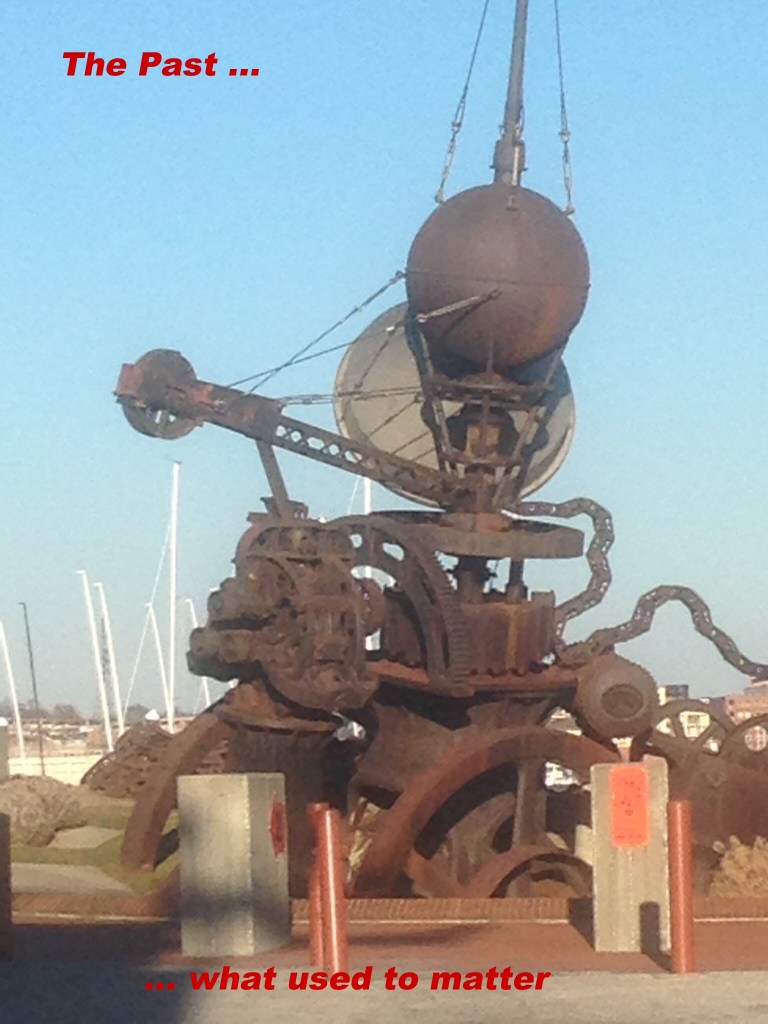
Over the last few decades in America, and perhaps elsewhere, “bureaucracy” and “bureaucrat” have taken on a pejorative connotation. Why is that? The basic idea of the word (from the French for, literally, a desk) is to describe organizational structures which serve the interests of a leader. The negative connotation, then, arises from our doubts that the “leader’s” interests are compatible with ours! Hence, being anti-bureaucracy equates with being anti-state, anti-corporate, anti-oligarch, or whatever. That, in turn, especially in recent decades here in the developed West, equates with entrepreneurism, adventurism, and boldness. Innovators are usually against bureaucracy. Think Elon Musk and Steve Jobs. Creative people, generally, don’t like bureaucracy – they have trouble “getting along” in a bureaucratic environment.
So, any defense of bureaucracy must rely on seeing the positive outcomes of the bureaucrat’s work. And there is much variability in measurement of those positive outcomes. By the very nature of the bureaucratic enterprise, the bureaucrats themselves must remain anonymous. They are not the leaders. Public attention and adulation go to those leaders – this is the sad lot of the bureaucrat, despite being the one who creates the cause for any adulation of the leader. On the flip side, the bureaucrat is insulated from any failures of the leader! Anonymity does have its benefits. The leader represents the bureaucratic system to the public, but the anonymous bureaucrat builds and maintains it.
If the bureaucratic system is designed to protect and facilitate the interests of the broad public, its smooth functioning should be appreciated and encouraged. But what if the interests of the leader (or leadership class) that the system is built to enhance work against the interests of the public? In extremis, you will see movements to “burn it all down.” If such a movement succeeds in fomenting some kind of revolution, the odds are the new regime will then create another bureaucracy to further its own aims. And the cycle continues!
Thomas Hobbes, in 17th century England, during such times of upheaval (English Civil War), wrote his classic work of political philosophy, Leviathan, which explores just these issues. He didn’t use the word “bureaucracy” but clearly imagined a monarch, and state, that encompassed such goals. It was this state alone that had the capability of delivering well-being to its populace. In this sense, he was the father of what we know as “liberalism” at least as much as the more junior Scottish philosopher, John Locke, who introduced the concept of human (“natural”) rights to our civilization. Without some sort of bureaucratic state, for Hobbes, anarchy would ensue. His “state of nature” was, famously, “brutish and short.” In the next century, a modified version of his thesis was formulated by Jean-Jacques Rousseau – who believed that the state of nature was not so brutish, since men were not so inherently cruel and evil as Hobbes seemed to think, but that the main nefarious influence on men was private property (thus departing from what we now call “classical liberalism”). But the Bourbon kings of his time, required their bureaus to facilitate and protect what they perceived as the “common good.” Thus, the idea of bureaucracy became fully developed.
During the 19th century, however, capitalism also developed – not just the mercantilism of the 17th century that Hobbes knew, involving trade among free agents, but large-scale institutions of manufacturing and finance, even higher education. They all required their own bureaucracies to deliver profit to their owners and benefit to their customers. It became accepted during that century that large organizations could only function via bureaucracy – big projects involved lots of paper pushers. Karl Marx realized this – and it was the source of his dispute with the anarchist wing of his followers (Bakunin, et al.) who he felt had been captured by a more “primitive” pastoral world, essentially pre-capitalist. When the 20th century arrived, bureaucracy finally received its own theoretical construct. This is where Max Weber made his contribution. Lenin and Stalin also made an imprint through the formation of the infamous Soviet state bureaucracy. In the 1930s, Leon Trotsky, exiled from the Soviet Union by political archrival Josef Stalin, wrote that bureaucracy too easily abetted tyranny and would ultimately either destroy the state, or succumb to capitalism. Notably, the 20th century also saw other cracks in the theory of bureaucracy – from the likes of Ludwig von Mises, who believed that market forces were more instrumental to human progress than an army of paper pushers could ever be.
We entered the 21st century with at least two battling philosophies of bureaucracy – one, the Weberian view that all good things in society originated and were protected by bureaucrats, with the opposing camp maintaining that the scorecard for bureaucracy was a net loser, and that the inexorable pursuit of profit was the prime motivator of social good (the Austrian School of Von Mises). Elon Musk and his DOGE are obvious examples of the latter “slash and burn” thinking. Unfortunately, there does not (yet?) seem to be any unified opposition to the thinking of that Austrian School – we who yearn for the bygone era of Karl Marx and Max Weber are consigned to reading history (and maybe also the ongoing struggles of much of the global South). I, for one, casually dismiss most anarchist thinking – what world do they live in, anyway? But I can’t ignore all the suffering and generally heartless effects of a strictly libertarian, or Austrian School, interpretation of society. Markets are clearly NOT supreme! Humanity should be.
The final question: does bureaucracy help or hinder general social benefit? Yes, there certainly are limits to the duplicative functions necessary for social well-being. Some consolidation may help. And I have serious doubts about dependence on one sole “leader” for right and justice – there must be checks and balances! There must be, then, multiple bureaucracies functioning at once over the same population – they may overlap, but friction can be minimized through democratic means. It just stands to reason that the “common good” requires implementors. Thinkers may dream up projects to increase the public benefit, but making them real, and delivering them to the customer, calls for those anonymous bureaucrats – whether employed by the state, the corporation, or the bold entrepreneur. And gathered around each of those entities are more anonymous bureaucrats, in the nonprofit and service sectors, who serve as brakes on tendencies toward avarice and predation. A constellation of organizations all interacting, perhaps competing, is what makes a complex society – and the common thread in all these organizations is that they function due to the work of those bureaucrats!
–– William Sundwick
 Warp and Woof