Uncertainty and Hope

Donald Trump and Elon Musk promise a cloudy picture for the future of EVs in the U.S. market. The combination of open hostility to EVs and “woke climate” concerns mixed with obviously transactional financial reasoning (Musk’s original claim to wealth!) leaves us scratching our heads about the near-term direction of the auto industry both here and around the world – at least insofar as the U.S. market influences it.
However, EVs are increasingly popular – especially as more competitors enter the fray (Tesla sales have been declining somewhat). In 2024, nearly 9% of new car sales in the U.S. were EVs – a big jump from 2023. At present, it looks like the leaders in the sector (behind Tesla) may include Hyundai from Korea and Volkswagen group from Germany, ahead of our traditional Detroit manufacturers. The traditional Japanese rivals to Detroit over the last 50 years in the American market are mere bit players in the EV competition. What strategic investment in the last few years (automotive product design requires several years from inception to market appearance) have caused this reshuffling of the automotive landscape in the U.S.?
Tesla, of course, started the ball rolling more than a decade ago. That 10-year head start (GM’s EV1 was an experiment, restricted to California, and only leased, another story), with it’s revolutionary “giga-factory” production methodology was at least as important to Tesla’s success as anything about the battery technology in the car itself. Then there was the equally critical marketing design, total freedom from franchised dealers. The Tesla Supercharger network for charging infrastructure also got a head start over any competitors – though now in question, since the rest of the industry jumped onto its NACS standard for EV ports. Musk seems to be wary of enabling his competitors, one of the greatest causes for alarm with his new role in Washington.
As an early adopter of EV technology (I still drive my 10-year-old Chevy Volt, never using gasoline for its “range-extender” PHEV engine), I’d sincerely like to see the overall sector develop – and I’m enough of a climate activist to realize that the U.S. is currently the main obstacle to the further well-being of the planet. I also believe in market capitalism to the extent that I think competition is good, if you want to spur growth. In the world auto industry, that competition can come from many quarters – even Vietnam (Vinfast). I did grow up in Flint, Michigan – to a GM family – but I’m not partial to the Detroit “Big Three” in my larger worldview. Those Hyundai and Kia EV models look plenty appealing to me.
So, let’s look at where the U.S. EV market stands in 2025. There is competition for Tesla, certainly – although that “Ur-EV” still dominates the sector. What can you buy – and for how much – if you were to start shopping today? It becomes clear when you explore the offerings, that most choices are priced considerably above what we would call “mass market” (<$40K). I confess that I live in an area where EVs do sell rather briskly – many of them Teslas, Rivians, BMWs, Volvos, and what not – not everybody in the country is so affluent. Infrastructure, as well as initial purchase price, is also a major constraint. You really need a combination of factors to make buying an EV sensible: 1) financial resources, 2) a driveway or garage where you can install a private level 2 or level 3 charger, and 3) a driving routine where you can count on less than the car’s range in a day. Unfortunately, these factors exclude a large segment of the American car-buying market: 1) anybody in rural areas, 2) most working-class people, 3) urban dwellers in apartments and condos. Until purchase prices can reach the mass market level and infrastructure can be built out onto highways, into small towns, and apartment parking lots, the growth of the EV market will be limited.
The good news is that battery range is, now, increasing – 300-mile ranges are available below $50K – as are charging networks. Electrify America and ChargePoint, if not Tesla’s Supercharger, are expanding. Again, Elon Musk may have the power to reduce further development of these resources – some citizen pushback may be required! I’m watching for the introduction of new models in that popular price range, where so far only Hyundai and Kia have gone (perhaps a re-introduction of GM’s Chevy Bolt before the end of year?) – here’s a rundown of what’s available in America at the close of the 2024 model year with base price below $50K (courtesy, editors of Inside EVs):
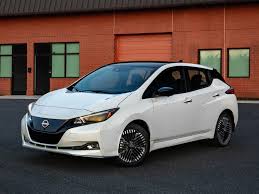
- Nissan Leaf S — $29K (149 mi. range)
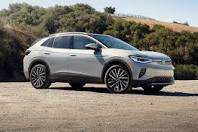
- VW ID.4 (Standard) — $33.6K (206 mi. range)
- Fiat 500e RED — $34K (149 mi. range)
- Hyundai Kona Electric — $34K (200 mi. range)
- Tesla Model 3 Long Range RWD (price cut temporary?) — $36.4K (363 mi. range)
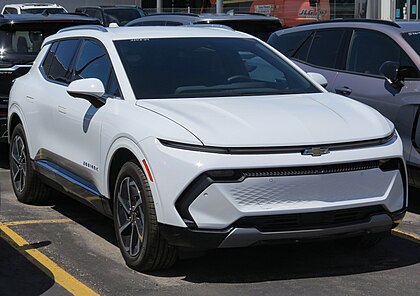
- Chevy Equinox 2LT — $37K (319 mi. range)
- Hyundai Ioniq 6 SE — $38.7K (240 mi. range)
- VW ID.4 Pro — $39K (291 mi. range)
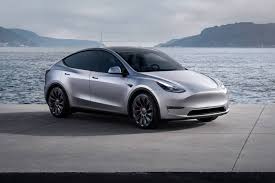
- Tesla Model Y Long Range — $39K (320 mi. range)
- Hyundai Kona Electric N-Line — $39.7K (230 mi. range)
- Chevy Equinox 2LT AWD — $40.5K (285 mi. range)
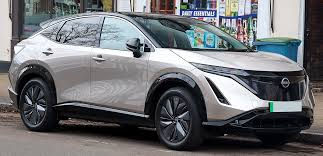
- Nissan Ariya Engage — $40.7K (216 mi. range)
- Kia Niro EV — $41K (253 mi. range)
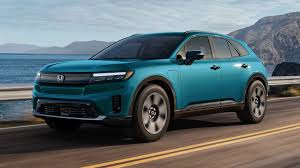
- Honda Prologue EX — $41K (296 mi. range)
- Tesla Model 3 Long Range AWD — $41.4K (341 mi. range)
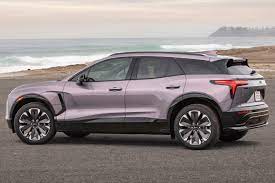
- Chevy Blazer LT (AWD) — $41.5K (283 mi. range)
- Tesla Model Y Long Range AWD — $42K (308 mi. range)
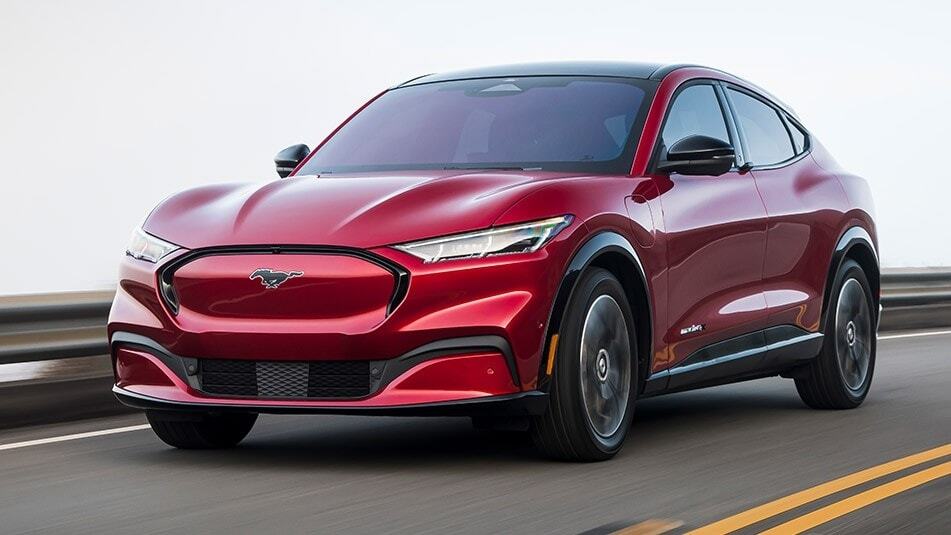
- Ford Mustang Mach-E — $42K (250 mi. range)
- Hyundai Kona Electric Limited — $42.5K (261 mi. range)
- Hyundai Ioniq 5 SE — $43K (220 mi. range)
- Kia EV6 Light — $44K (232 mi. range)
- Toyota bz4x XLE — $44.5K (252 mi. range)
- Nissan Ariya Evolve+ — $45.3K (289 mi. range)
- Tesla Model Y Performance AWD — $45.4K (279 mi. range)
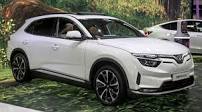
- VinFast VF8 — $46K (264 mi. range)
- Mini Countryman SE ALL4 — $46K (212 mi. range)
- Subaru Solterra Premium — $46.3K (227 mi. range)
- Hyundai Ioniq 6 SEL — $46.4K (305 mi. range)
- Kia EV6 Light Long Range — $47.3K (310 mi. range)
- Cadillac Optiq Sport 1 — $47.5K (~300 mi. range)
- VW ID.4 Pro S AWD — $47.8K (263 mi. range)
- Chevy Blazer RS — $48K (324 mi. range)
- Toyota bz4x Limited — $48.6K (236 mi. range)
- Honda Prologue Touring AWD — $48.6K (281 mi. range)
- Hyundai Ioniq 5 SEL — $48.8K (303mi. range)
- Ford Mustang Mach-E Premium (larger battery) — $49K (320 mi. range)
- Nissan Ariya Evolve+ AWD — $49.3K (272 mi. range)
- Subaru Solterra Limited — $49.9K (222 mi. range)
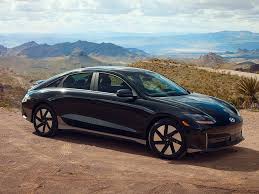
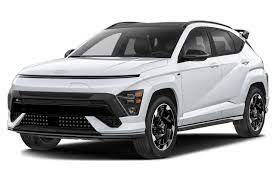
Note from the above list, arranged by price, that choices balloon considerably above $40K … and range is dependent mostly on battery size and whether your vehicle is all-wheel drive (AWD ranges are usually less than comparable RWD or FWD versions of same model). So, a significant expansion of the EV market likely will depend more on significant reduction in purchase price, since ranges already exceed most urban area daily driving distances between overnight charges. But a long highway trip could still be problematic without further expansion of those charging networks (including Tesla’s).
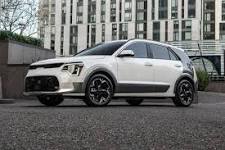
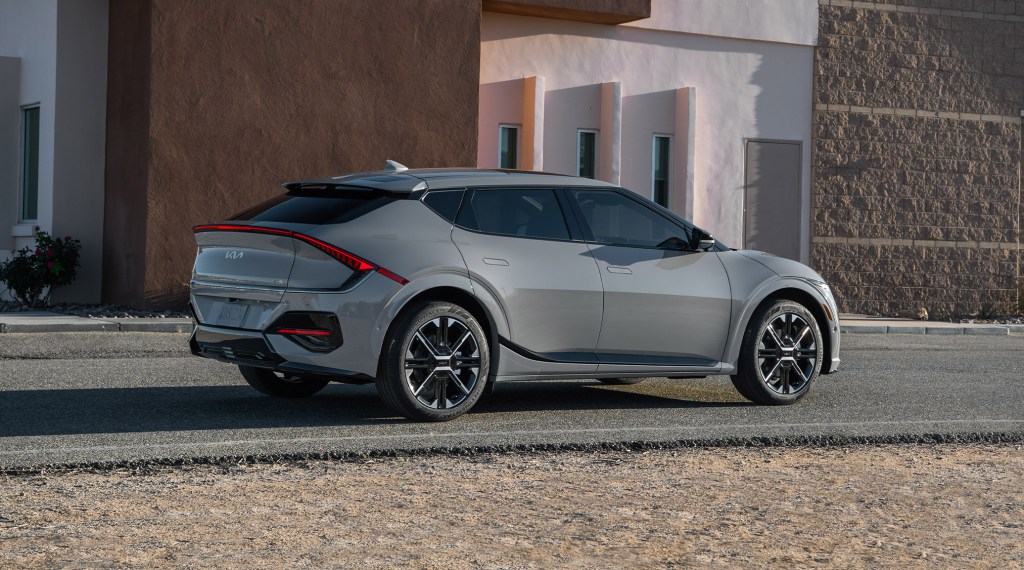
There are no trucks on this list. The electric pickups from Ford, GM, Rivian and Tesla are all way too expensive – but around here at least, I see both Rivian R1T (as well as R1S SUVs) and Tesla Cybertrucks. People with money have far more choices – including Audi, BMW, Mercedes, Volvo and Polestar models. Ordinary folks will mostly be limited to the list above for the 2025 model year.
An interesting alternative to the still-overpriced EVs is the wide range of PHEVs also available. My own experience with my 2015 Chevy Volt makes a hearty endorsement of the utility of such a car for daily short-range commuting – with occasional extra duty for gasoline-fueled long trips. The problem with most PHEV offerings is that they cannot be distinguished from their non-plug-in versions – they all seem to be modifications of pre-existing models (you must see them plugged in, or read the badge on the rear, to know that they are PHEVs). Without that magical industry mystique of eye-catching individuality, nobody can be induced to pay extra for a plug-in just for the sake of reducing emissions! Here, it seems the only solution is to discontinue the non-plug-in versions of those popular models. At any rate, one such popular offering is the Toyota RAV-4 Prime, which has a range of 42 miles on battery alone (comparable to my Volt when it was new) and starts at $45K. The Prius Prime, similarly, boasts a 45-mile battery range, and starts at only $34K. It seems many buyers skeptical of fully electric vehicles could be enticed by PHEVs, if only they could be convinced that they were worth it. Manufacturers could help, too, by re-introducing unique models like that original Volt. We’ll see what happens in the next few years – but so far, it seems industry investment has been mostly focused on battery development for full battery-electric models which they can introduce with splashy new-model fanfare. And there are those political dimensions, too. Lobbying will be for full EVs, not PHEVs, considering the sunk costs — this is the most likely path forward for the next few years. Hyundai Motors will be opening their Georgia battery plant soon to facilitate their robust range of EVs (Hyundai, Kia, Genesis). VW is already here, and others may follow. Toyota, Honda and Nissan could certainly draw on their established U.S. manufacturing presence for their EVs, if they see the market expanding sufficiently. The luxury market BMW and Mercedes models can also be manufactured domestically. The threat of tariffs could be minimized for these big assembly operations, but won’t go away entirely – only GM is currently situated to avoid tariffs to any large extent.
And, of course, Tesla …

… William Sundwick
 Warp and Woof