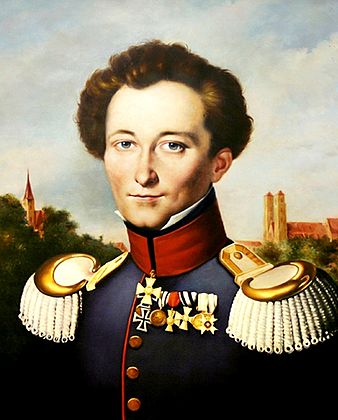
No, I’m not disputing the famous Carl von Clausewitz aphorism: “War is merely the continuation of policy by additional means.” It’s hard to disagree with that – regardless of whether you translate the German “politik” as policy, politics, or diplomacy. The statement is self-evident from our historical experience. Clausewitz, however, was establishing a dialectical tension in his magnum opus, On War. In his view, that statement was the antithesis of the primary thesis that war was merely a wrestling match, or duel. What Clausewitz was really chasing was his synthesis: that war was a rational response to an otherwise unresolvable problem of achieving some political desire. His letters and other writings confirm that he did, indeed, recognize that war was a terrible, tragic malignancy of history. While perhaps leaning toward cynicism, he apparently subscribed to his era’s intellectually dominant strain of liberalism.
Where Clausewitz went wrong was in his synthesis, that dialectic. The evidence for his model was what he called the “Amazing Trinity” (Wunderlich Dreifaltigkeit) of all wars: strong emotion (enmity, hatred)/chance (military leadership)/policy (politik). Today, we often translate that trinity as “people/army/government.” In fact, even by the early 20th century, noteworthy political leaders like Lenin and Mao were using just that translation. Both were followers of Clausewitz and believed that the government (representing the people, especially the proletariat) would achieve victory in the great class struggle via the army (the Red Army was its “vanguard”). That same trinity of people/army/government was also an important influence on one early 20th century West Point graduate, Dwight D. Eisenhower. He wrote that he was strongly influenced by Clausewitz, whom he read as a cadet. Eisenhower saw a very similar interaction between government, representing the people (democracy), empowering the military to achieve its goals. But Eisenhower, as President, would modify that trinity by replacing the middle element of the “army” (“chance”) with the theoretical concept of “deterrence” for the new age of nuclear weapons. It was avoidance of war, rather than war itself, that became the political objective. We now understand chance to be entirely scientific — via game theory and complexity theory. And even the version that substitutes “army” depends on nothing more than the interaction of the “people” (to Clausewitz, a “blind force of nature”) with their government’s policy. The army and its commanders, like chance, are mere tools for exploiting political aims. Does this also apply to the people?
Clausewitz apparently saw the chance element of his Trinity as dependent upon rationality – to include calculation of probabilities of success for limited goals as well (the alleged “military genius” of battlefield commanders). And he correctly identified asymmetrical warfare as favoring the defense over the aggressor. But, with his Prussian military tradition and values, he failed to understand the true nature of the subordinate role for the army in that trinity. Clausewitz’ experience had been with the limited intelligence (“fog of war”) available to the Prussian army during the Napoleonic period – he attributed Prussian failures to that factor of “chance.” But intelligence methods, like other technology, have improved markedly over the last 200 years! Even von Moltke, later in the 19th century, valorizing Clausewitz’ idea of “absolute war,” built a much stronger Prussian army. Moltke was playing on the perceived need to mobilize the entire population behind a war effort – something which developed into the Third Reich’s concept of “total war” in the 20th century. Thus, the people became the critical link in the triad.
But what of that other leg of the Trinity: the war aims of government? What does the government hope to accomplish with its policy? 21st century wars are initiated by governments who are fully cognizant of all the history behind aggressive military actions – even Clausewitz believed habitual aggressors were more likely to fail than succeed. And surely, when the “people” become the aggressors against the government, they face the same (or greater!) odds. So, what motivates them? What are their war aims?
It seems to me the only legitimate war aims for any government are strictly defensive. Clausewitz doesn’t acknowledge this basic moral principle. Perhaps his cynicism prevented him from elucidating it – or perhaps he believed, with his European Enlightenment mindset, that if the power of the people were behind the government, then that government would surely choose a rational path, utilizing diplomacy to its full extent, and avoid war. But we know better now, two centuries later. Today’s aggressor states have skills and tools to manipulate their populations to support even the most outlandish cases for self-defense — Weapons of Mass Destruction, NATO encirclement, and Palestinian desire for genocide of Israelis, are but a few of the cases for aggression we’ve seen in the last twenty years. Going back a bit further, there was the international Communist conspiracy, the Jewish conspiracy to destroy our culture and poison our blood, or even noble projects like ending slavery. They’ve all been cited as justification for war. Clausewitz, himself, left the Prussian service and joined the Russian army to fight Napoleon’s forces at Borodino – then rejoined his native land’s effort to fight Napoleon after their alliance failed (Waterloo Campaign of 1815). This is called “patriotism.” Ignoring the causes of war and focusing only on the methods of waging, or winning, a conflict – even at the most strategic level, where Clausewitz was engaged – is to ignore what seems to me to be the fundamental moral imperative for all of us, as human beings.
Yes, war IS the continuation of policy by additional means – but what if those additional means did not rely on violence against whole populations? I think Clausewitz was hobbled by the nature of warfare as he knew it – the Napoleonic campaigns were still waged on battlefields by trained (even if conscripted) armies. Collateral damage may have been to small villages, and to land holdings of aristocratic barons, but not to large numbers of innocent civilians in urban areas. War has evolved since Clausewitz’ time, and not in a good way! So, he was wrong, but Clausewitz cannot be faulted for his lack of prescience. I put my money on complexity theory going forward – complex adaptive systems seem to me to be the best model for warfare in the 21st century. The less effort made to justify wars via morality the better. I’d rather see more negotiation, less military action, to resolve all political differences or aspirations. Some call this “cognitive empathy” in international relations. And it should work for non-state actors as well – that sort of warfare is far more prevalent in our world today, anyway.
— William Sundwick
 Warp and Woof