If So, Let’s Bury It!
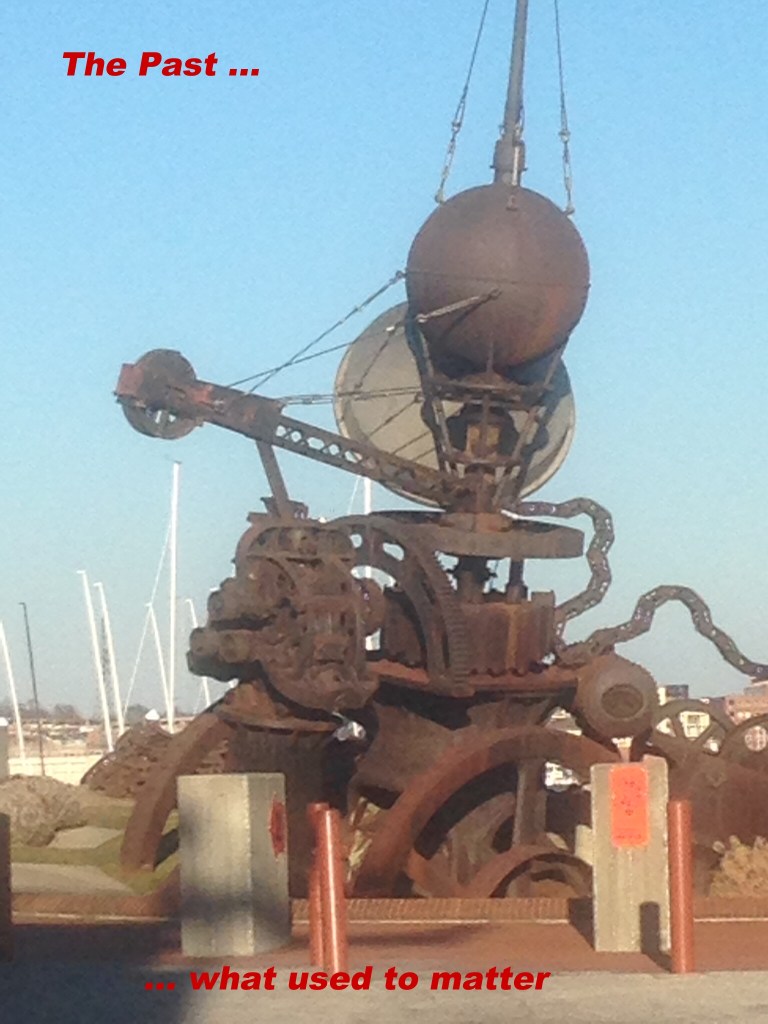
First there was the ideology we now call “classical liberalism.” It emerged with John Locke, then further developed through the 18th and 19th centuries, perhaps reaching its philosophical pinnacle with John Stuart Mill. Locke launched the European Enlightenment with his idea of “natural rights” including life, liberty, and property. Thomas Jefferson incorporated them into his original draft of the Declaration of Independence for the American colonies. Mill, in his “On Liberty” of the mid-19th century, did not retreat from inclusion of property as a natural right. Liberalism has embraced the pursuit of property (i.e., capital) among its basic precepts ever since. Property rights are inherent in classical liberalism.
Property rights, however, were problematic to Karl Marx, who criticized his contemporary Mill on just those grounds. How can one justify limiting freedoms solely to cases where harm is caused to others when it’s clear that unrestrained accumulation of capital harms all who, due to scarcity, are left with no (or less) capital? Mill’s only response to Marx’s critique was that, so long as society provided “equal opportunity” to acquire wealth, it was an acceptable solution; only some guardrails required.
Thus, the conflict of equality versus freedom was set in motion. It intensified in the 20th century, as emergency measures to redistribute wealth following financial crashes, or desires to avoid armed uprisings by workers, merely mitigated the ultimate contradiction of the liberal capitalist structure which now dominated Western societies (and in our century, the developing world as well).
“Neoliberalism” is what followed the hallmark work of John Maynard Keynes, who rationalized those emergency redistributive measures during the Great Depression. It originated with a group of economists (especially in Austria) who considered all state intervention in production and distribution of wealth to be perverse. The Ludwig von Mises and Friedrich Hayeks of the world economic establishment successfully built an alternate following. Given some fortuitous political events beginning in the 1970s in Chile, then later in the U.K. under Margaret Thatcher, and the U.S. with Ronald Reagan, they could insert their theories into the macroeconomic systems of multiple “laboratory” states. Neoliberalism was established.
While there are some competing definitions of that economic philosophy we know as neoliberalism, its essence is that compatibility between the state’s idea of “the common good” and the supremacy of market mechanisms is limited at best. And to extreme neoliberal partisans, like libertarians, the state is essentially the enemy. In the neoliberal society, some public goods may be necessary but they should be kept to a minimum! Somehow, market pricing is considered the most efficient method of resource allocation. And, even where some governmental planning is required (guardrails), it should be done at the lowest, most localized, level possible.
The mantra of neoliberalism is: “central planning bad, capital accumulation good.” Since capital accumulation equals growth, and growth is what capitalism is all about, the idea that the well-being of society is best served by whatever stimulates growth is a natural position for the true neoliberal.
In contemporary U.S. political discourse, the economic world view held by those who call themselves “progressives” (the term “liberal” is sometimes used here in error) is usually seen as the antidote, or opposite, to neoliberalism. Most American progressives closely follow Keynesianism. European political parties have a somewhat more complicated alignment of economic philosophies – Marx is still alive in some political parties – and ethnonationalism is often combined these days with favorable disposition to central planning and the welfare state. Both in the U.S. and those parliamentary European democracies, the market supremacy ethos of neoliberalism seems to be fading. Neoliberalism has become an epithet in many places. It is associated with an economic philosophy that died with Milton Friedman, if not Hayek.
What can we expect over the next few election cycles in all these countries?
Political campaigns both here and in Europe, recently, have been turning on themes that are largely non-economic. It seems that cultural issues like gender identity, reproductive freedom, and “wokeness” are motivating politicians (if not their voters) more in the U.S. And European politics is often centered on similar cultural issues involving immigration or language groups. Have those infamous “first world problems” really come down to this? Are we all too prosperous to care about redistribution?
Thomas Piketty has devoted his career to analyzing inequality – the solution offered in his mammoth work, Capital and Ideology, is more progressive taxation. And Paul Krugman, the Nobel-prize winning dean of the economics columnists, writing in his Arguing with Zombies, deplores neoliberal nostrums. They both think that economic philosophy remains important in the 21st century. They both see value in further redistribution of resources. And they both see the political intransigence of those remaining pillars of neoliberalism as their foe. But when running for elected political office, who dares speak of economic issues in their speeches?
Clearly, the perceived political advantage of running on economic issues is now seen as limited. Perhaps it even alienates voters? Not so in parts of the developing world – notably South America – where traditional left/right economic alignments still motivate political campaigns. Here in the First World, we should explain to the electorate that we’re all in this together – the affluent and the struggling – regardless of race or ethnic background, gender, or educational level. We can only grow together, not in opposition to one another, and building a non-zero society is in all our interests. This vision requires: 1) we understand that the pursuit of profit does not necessarily correlate with social good; 2) we know how capital is valued by the market; 3) we appreciate the original meaning of Locke’s Natural Rights – property rights were primarily intended as anti-slavery or anti-serfdom admonitions; and, finally, 4) we recognize the importance of membership in a community of all who share our basic freedoms. We can’t succeed in burying the ugly side of neoliberalism when our political systems valorize zero-sum concepts of wealth, focus on cultural or ethnic identities instead of shared benefit, or distrust those very representative democracies we have built.
So, what replaces neoliberalism? Perhaps it has no label yet. The term “post-neoliberalism” has been appropriated by the ascendant Latin American Left. But those of us who live in the wealthier nations of North America and Europe, have so far found no such label. “Socialism,” of course, is still poison to vast segments of (American) voters – can’t use that word! Matthew Yglesias has tried the term “popularism,” but that sounds to some of us like it endorses ethnocentric cultural insularity (appeals more to rural voters than cosmopolitan urbanites). Whatever label is used, if any, it needs to recognize a large, inclusive, community – bigger cohort produces bigger tax base, more benefits! And it should invoke being on the side of the people – populism doesn’t have to be negative. Perhaps we can complete the burial of neoliberalism simply by not talking about it – just by advocating the correct policies!
— William Sundwick
 Warp and Woof